



Electric underfloor heating vs storage heaters
Compares electric underfloor heating with storage heaters on running cost, Economy 7, comfort, control and fitting, and sets out the options for replacing old storage heaters.
Short answer: Storage heaters are usually cheaper to run than electric underfloor heating, because they charge on cheap overnight electricity, often around 12.5p to 16p per kWh on Economy 7, while thin electric UFH mostly runs when you need the heat, at up to 26.32p per kWh at the October 2026 price cap. Electric UFH gives better control, a warm floor and no bulky heaters on the walls, and suits bathrooms and kitchens best. If you are replacing storage heaters across a whole home, water underfloor heating with a heat pump is usually the cheapest to run.
Storage heaters and electric underfloor heating (UFH) are both 100% efficient at the point of use. Every kWh of electricity they draw becomes a kWh of heat. The difference is when they draw it, and so what each kWh costs, and how well each one keeps the room at the temperature you want.
This guide compares the two on running cost, comfort, control and fitting, explains whether electric UFH can use an off-peak tariff, and sets out the options if you want to replace old storage heaters. Energy prices use the Ofgem October 2026 price cap for Great Britain, paid by direct debit, unless stated.
How do storage heaters and electric underfloor heating work?
A storage heater charges a heavy core, often clay or ceramic bricks, with cheap electricity overnight and releases that heat the next day. Electric UFH heats the floor directly when the thermostat calls for heat, using mats or cables under the floor finish.
- Storage heaters on older models have an input dial, which sets how much heat is stored overnight, and an output dial, which sets how fast it is released. The Energy Saving Trust says modern heaters add automatic charge control, a thermostat and a programmer.
- Electric UFH is controlled by a floor heating thermostat, usually with a floor probe that limits the floor temperature. It heats when you set it to, at the price of electricity at that time.
The Energy Saving Trust notes that storage heaters do not recharge until the next day, so you cannot quickly raise the temperature later. Electric UFH can respond within the day, though how fast depends on the floor. See our guide to UFH warm-up time.
Which is cheaper to run?
Storage heaters are cheaper per kWh, because most of their charge is bought at the off-peak rate. Electric UFH bought at the single rate costs about twice as much per kWh.
| Heating and tariff | Price per kWh of heat |
|---|---|
| Storage heater, Economy 7 off-peak | about 12.5p to 16p |
| Electric UFH, single rate | 26.32p |
| Storage boost or UFH, Economy 7 day rate | about 28p to 34p |
| Water UFH with a heat pump, single rate | about 8.8p |
The Economy 7 ranges are the off-peak and peak rates one energy advice site listed for September 2026, which vary by supplier and region. The heat pump figure assumes about 3 units of heat per unit of electricity, which is the figure the government gives.
A worked example: one large energy supplier gives a medium 2kW storage heater charging for seven off-peak hours as using 14kWh. At 15p to 16p per kWh that is about £2.10 to £2.24 a day. The same 14kWh from electric UFH at 26.32p would cost about £3.68. That gap closes if the storage heater gives out heat you did not need, such as in a mild afternoon or an empty house.
Watch the boost button. The Energy Saving Trust warns that a storage heater's boost can draw electricity at the most expensive Economy 7 rate. For floor-by-floor sums on electric UFH, see our guide to electric UFH running costs per m².
Can electric underfloor heating run on Economy 7?
Only partly. A thin heating mat under tiles holds very little heat, so it has to run when you want warmth, which for most people is the day rate. Electric cable buried in a thick screed can store some heat overnight and release it during the day, more like a storage heater.
If you are on Economy 7 now, check your off-peak hours with your supplier. Suppliers note that off-peak times vary by area, and one energy advice site lists windows such as 00:30 to 07:30 in London and the South East. Our guides to electric UFH on Economy 7 and in-screed electric UFH cable explain how to set the thermostat for a dual-rate tariff.
Which gives better comfort and control?
Electric UFH gives better control. You set a temperature and a schedule for each room, and the thermostat holds it. A storage heater has to guess the next day's weather the night before.
- Running out of heat. One energy supplier says older storage heaters could store too much heat or release it too fast, so rooms did not stay warm into the evening. Modern models with thermostats and smart charging largely avoid this.
- Evening top-up. When a storage heater runs out, the only quick fix is boost or another heater, at the peak rate.
- Even heat. UFH warms the whole floor. A storage heater warms the air from one spot on the wall.
- Floor temperature. BS EN 1264 limits the floor surface to 29°C in living areas and 33°C in bathrooms, so UFH output is limited to about 100W/m² in most rooms.
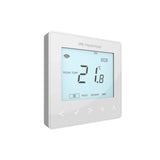
A floor thermostat such as the Heatmiser Slimline-E gives you a programme for each day and a floor limit to protect the finish.
What about fitting, space and weight?
Electric UFH takes no wall space but needs the floor up. Storage heaters need no floor work but are bulky and heavy. The Energy Saving Trust notes that some larger models weigh over 150kg.
| Storage heaters | Electric UFH | |
|---|---|---|
| Floor work | None | Under the new floor finish |
| Wall space | One heater per room | None, only a thermostat |
| Fitting | Registered electrician, hard-wired | Qualified electrician for final connection |
| Fitted cost | Per heater | £50 to £85 per m² |
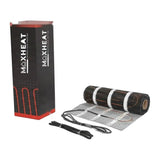
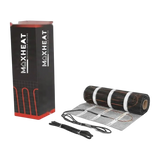
The UFH fitted cost range is the one the Energy Saving Trust quotes from a trades directory. A new electric UFH circuit is notifiable under Part P in England and Wales, and BS 7671 requires RCD protection not exceeding 30mA. If you remove old storage heaters, the Energy Saving Trust warns that heaters fitted before 1974 may contain asbestos and need specialist handling. MaxHeatUFH 150W/m² heating mats come in sizes from 1m² to 12m².
Should I replace my storage heaters with underfloor heating?
It depends on how much of the home you are heating and whether you can add a heat pump. Here are the three common routes.
- Upgrade the storage heaters. Heaters made after 2018 must meet stricter efficiency standards. High heat retention models are well insulated and have automatic controls, and the Energy Saving Trust says an EPC may recommend them.
- Add electric UFH to some rooms. Fit mats in a bathroom or kitchen when you relay the floor, and keep storage heaters elsewhere.
- Switch to a heat pump with water UFH. This is the lowest running cost per kWh of heat. The Boiler Upgrade Scheme gives up to £7500 towards an air, ground or water source heat pump in England and Wales, and electric heating without a heat pump is an eligible starting point. The installer must be MCS certified.
VAT: HMRC applies 0% VAT to qualifying energy-saving materials, including heat pumps, until 31 March 2027, but only where the same business supplies and installs them. Supply-only goods are standard-rated. MaxHeatUFH charges 20% VAT on every product it sells, so kit bought supply-only from any merchant, including MaxHeatUFH, includes 20% VAT. Our guide to underfloor heating with a heat pump explains how the two work together.
Design your UFH system yourself in 3 minutes with MaxHeatUFH ProLoop and get an instant quick design and quote. Add your rooms and it gives you a quick UFH design, with the circuits laid out from the manifold you place, plus a fully priced kit list. Start your design
Frequently asked questions
Is electric underfloor heating cheaper than storage heaters?
Usually not. Storage heaters charge on off-peak electricity, often about 12.5p to 16p per kWh on Economy 7. A thin electric mat mostly runs at the day or single rate, 26.32p per kWh at the October 2026 price cap.
Can I run electric underfloor heating on Economy 7?
Yes, but a thin mat under tiles cannot store much heat, so most of its use falls in the day. Cable buried in a thick screed can store more heat overnight.
Are storage heaters 100% efficient?
Yes, at the point of use, like all direct electric heating. Their cost advantage comes from cheaper off-peak electricity, not from higher efficiency.
Why do storage heaters run out of heat in the evening?
Older models can release their heat too fast during the day. Keep the output low in the day and raise it in the evening, or choose a modern model with automatic controls.
Can I have electric underfloor heating and storage heaters in the same home?
Yes. A common mix is electric UFH in the bathroom and kitchen, where you want a warm floor, with storage heaters in the larger rooms.
Is a heat pump with underfloor heating cheaper than storage heaters?
Per kWh of heat, usually yes. At about 3 units of heat per unit of electricity, a heat pump gives heat for about 8.8p per kWh at the single rate, below typical Economy 7 off-peak rates.
Sources: Ofgem energy price cap, Energy Saving Trust: electric storage heaters, Energy Saving Trust: underfloor heating, gov.uk: heat pumps explained, Energy Saving Trust: Boiler Upgrade Scheme, HMRC VAT Notice 708/6, IET Wiring Matters: BS 7671 Section 753, Planning Portal: electrics and Part P
Products in this guide
Watch how each part works and how to fit it, and download its data sheet and install manual.


Every data sheet and manual: Product Library · All videos: MaxHeatUFH on YouTube

Design it in MaxHeatUFH ProLoop
Add your rooms, choose screed, overlay, joisted or electric, and get a free quick design and full kit list with prices.


