How long does electric underfloor heating take to warm up?
Realistic warm-up times for electric underfloor heating: 30-60 minutes on insulation boards against 2-8 hours on bare concrete, what speeds a floor up, first switch-on rules over fresh adhesive, and what a warm-up costs.
Short answer: On insulation boards over concrete, an electric underfloor heating mat warms the tiles in roughly 30 minutes to an hour. Laid straight onto an uninsulated concrete slab, the same mat can take anywhere between two and eight hours, because the slab soaks up the heat first. The three things that set your warm-up time are the insulation under the mat, the mat's output in W/m² and the thickness of the tile above it. The very first switch-on is different: wait until the adhesive has fully dried, then bring the floor up gradually.
How fast an electric floor warms is not a property of the mat alone. The same 150W/m² heating cable can feel warm underfoot in half an hour or still be fighting a cold slab at bedtime, depending entirely on what you laid it on. That makes heat-up time a design decision you make before the tiles go down, not a setting you can change afterwards.
This guide gives the realistic times, explains what speeds a floor up and what slows it down, covers the special rules for the first ever switch-on over fresh adhesive, and shows what a warm-up actually costs at current electricity prices. MaxHeatUFH electric mats are made for tile and stone floors, so the figures here are for tiled floors; for wet systems in screed, see how long underfloor heating takes to warm up.
How long does electric underfloor heating take to warm up?
With the floor built properly, under an hour. Published tiling-industry guidance puts an electric system on insulated boards over a concrete base at roughly 30 minutes to an hour to warm up, and the same source puts a mat heating an uninsulated floor at anywhere between two and eight hours.
| Floor build-up | Typical warm-up |
|---|---|
| Mat on insulation board, tiled | About 30 to 60 minutes |
| Mat direct onto uninsulated concrete, tiled | About 2 to 8 hours |
The spread in the second row is the slab: a thick, cold, uninsulated slab in January sits at the slow end. The lesson is simple. The mat's heat goes both ways, and insulation under it is what forces the heat up into the tile instead of down into the ground.
What decides how fast the floor warms?
Four things, in order of importance:
- Insulation under the mat. The single biggest factor, as the table above shows. An insulation board between the subfloor and the mat cuts the warm-up from hours to minutes and stops you paying to heat the ground. See our guide to insulation boards for electric underfloor heating.
- Mat output. A 200W/m² mat puts a third more heat into the floor than a 150W/m² mat, so it reaches temperature sooner. Higher wattage changes the speed, not the final temperature; the thermostat sets that.
- Tile thickness and material. Thicker and denser tiles take longer to heat through and hold their heat longer once warm, a point the tiling industry makes for stone and large porcelain in particular.
- Starting temperature. A floor warming from 18°C gets to comfort far sooner than one warming from 12°C in an unheated room, which is why setback programmes beat switching fully off in constantly used rooms.
How do insulation boards make it faster?
An insulation board is a thin sheet of extruded polystyrene (XPS) faced on both sides with fibreglass-reinforced cement, so it insulates like foam but takes tile adhesive like a board. Bonded to the primed slab, it puts a thermal break directly under the heating cable.
With the break in place, the only mass the mat has to heat is the adhesive layer and the tile, a few millimetres of material, instead of a hundred millimetres or more of concrete. That is the whole difference between the 30-minute floor and the 8-hour floor. The boards also pay back on running cost: the heat that previously leaked into the slab was electricity you bought, and an insulated floor can be run on shorter heating periods because it responds quickly.
Our cement-coated XPS tile backer boards come in 1200 x 600mm boards, and the range of thicknesses in our insulation boards collection lets you balance performance against floor height at thresholds.
What about the very first switch-on after tiling?
The first warm-up is the one time you must not rush, because the mat is sitting in fresh adhesive and grout. Two rules from the manufacturers and the tiling trade:
- Wait until the adhesive and grout have completely dried. One manufacturer's installation guide says not to switch the heating on until the adhesive and grout have fully dried, and to follow the adhesive manufacturer's stated drying times. Turning the mat on early can dry the adhesive too fast and weaken the bond.
- Bring the temperature up gradually. The same guide says to turn the system on gradually over a 48-hour period, and tiling-industry guidance goes further for the floor's first season: raise the temperature step by step over 10 to 14 days to the normal operating level, to avoid thermal shock in the tile bed.
So the first week's routine is low floor temperatures, increased a little each day, with the floor probe limit doing the protecting. After that, the floor can follow its normal programme. Our guide to electric UFH thermostat settings covers sensible temperatures and schedules.
What does a warm-up cost in electricity?
Less than most people expect, when the floor is insulated. Electricity averages 26.32p/kWh under the October 2026 price cap for a direct debit customer in Great Britain. Take a 4m² bathroom floor on a 150W/m² mat: that is 0.6kW at full power. A 30 to 60 minute warm-up on insulation boards uses 0.3 to 0.6kWh, which is about 8 to 16p.
Now the uninsulated version of the same floor: hours of full-power running to warm the slab, several times each day if the heating cycles, with much of that heat never reaching the room. The insulation boards cost less than a single winter of that waste in most rooms. For whole-room sums, see electric underfloor heating running costs per m².
Two habits keep the running cost tied to the fast warm-up: programme the floor to come on 30 to 60 minutes before you use the room rather than running all day, and use a setback temperature instead of full off in rooms used repeatedly through the day.
Why is my electric floor slow to warm up?
Work through the likely causes:
- No insulation under the mat. The most common cause by far, and the one you cannot fix without lifting the floor. The giveaway is a warm-up measured in hours on a concrete ground floor.
- Thermostat limited. A floor limit set low, or a thermostat running in air mode with a low set point, stops the floor before it feels warm. Check the sensor mode and limits first; it is the cheapest fix there is.
- Cold room, cold structure. A floor in an unheated room spends its output warming the room. The floor is the only emitter, so give it time or a higher programme in cold snaps.
- Undersized system. A low-wattage mat covering a small fraction of the floor in a high heat loss room will always be slow. Our guide to electric underfloor heating wattage explains matching output to the room.
- A genuine fault. If a floor that used to warm quickly has slowed or stopped, have an electrician test it; a qualified electrician must make the final connection and any repair under Part P of the Building Regulations and BS 7671, and the circuit must be on a 30mA RCD.
Free design tool: comparing electric with a water system for a bigger area? Design your UFH system yourself in 3 minutes with MaxHeatUFH ProLoop and get an instant quick design and quote. Start your design
Frequently asked questions
How long does electric underfloor heating take to heat up under tiles?
About 30 to 60 minutes on insulation boards over concrete. Without insulation boards, two to eight hours, because the slab absorbs the heat first.
Does a 200W/m² mat warm up faster than a 150W/m² mat?
Yes. It puts a third more heat into the same floor, so it reaches temperature sooner and copes better in high heat loss rooms. The thermostat still decides the final temperature.
How soon after tiling can I turn the heating on?
Only once the adhesive and grout have completely dried, following the adhesive manufacturer's drying times, and then gradually: the mat maker's guidance is a gradual turn-on over 48 hours, and tiling guidance recommends stepping up to normal temperature over 10 to 14 days.
Should I leave electric underfloor heating on all day?
Not usually. An insulated electric floor responds in under an hour, so programmed heating periods around your routine cost less than constant running. A setback temperature suits rooms used on and off all day.
Why does my bathroom floor warm up slower in winter?
The floor starts colder and the room loses heat faster, so more of the mat's output goes to the room before the tiles feel warm. A slightly earlier programme start in winter is the usual answer.
Do thick tiles make underfloor heating slower?
Yes, thicker and denser tiles take longer to heat through, and they hold warmth longer once heated. The difference is minutes, not hours, when the floor is insulated.
Can I add insulation under an existing electric floor?
Not without taking the floor up. If a slow floor is being refurbished anyway, that is the moment to add boards; the warm-up drops from hours to under an hour.
Sources: Tile & Stone Journal: tile adhesives with underfloor heating, Ofgem: energy price cap October to December 2026
Products in this guide
Watch how each part works and how to fit it, and download its data sheet and install manual.


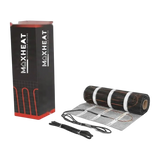


Every data sheet and manual: Product Library · All videos: MaxHeatUFH on YouTube

Design it in MaxHeatUFH ProLoop
Add your rooms, choose screed, overlay, joisted or electric, and get a free quick design and full kit list with prices.