








Underfloor heating for a home office: heating one room you work in
How to heat a home office cheaply with underfloor heating: electric mat vs a single water zone, real running costs at the October 2026 price cap, and the controls and schedules that suit a working week.
Short answer: For a home office you heat all day while the rest of the house idles, underfloor heating one room on its own thermostat is one of the cheapest comfortable options. An electric mat in a typical 9m² office draws about 1kW flat out, which costs about 26p an hour at the October 2026 price cap, and far less once the thermostat is cycling; a water UFH zone run from the boiler costs roughly a third of that per unit of heat. HSE guidance suggests at least 16°C for seated indoor work; most people settle around 20°C.
Working from home changes how a house is heated. Instead of warming the whole house morning and evening, you need one room comfortable for eight hours in the middle of the day. Running the central heating for the full house to sit in one room is the expensive way to do it; heating only the office is where the savings are.
Underfloor heating suits an office particularly well. There are no radiators to block where the desk wants to go, the warmth is even across the room with no hot and cold corners, and a heated floor under a desk keeps feet warm, which is where sitting still all day bites first. This guide compares electric and water UFH for a single workroom, puts real running costs on each, and covers the controls that make day-long heating affordable.
How warm should a home office be?
At least 16°C, and realistically 19 to 21°C for comfort at a desk. The Health and Safety Executive's guidance for employers, based on the Approved Code of Practice to the Workplace (Health, Safety and Welfare) Regulations, gives 16°C as the usual minimum for indoor work (13°C where the work is physical). That is a floor, not a target: it is guidance for workplaces, but it is a useful reference point for a room you sit still in all day.
Sitting still generates little body heat, so an office often wants to be a degree or two warmer than a living room you move around in. UFH helps here because the radiant warmth from the floor lets most people feel comfortable at a slightly lower air temperature, and because your feet, the first thing to feel cold at a desk, sit on the warmest surface in the room.
Is electric or water UFH better for one office?
Electric is cheaper and simpler to install in one room; water is cheaper to run every day after that. Which wins depends on how many hours the room is heated.
| Electric mat | Water UFH zone | |
|---|---|---|
| Floor build-up | A few millimetres plus insulation board | Overlay boards from about 18mm, or screed |
| Running cost per kWh of heat | 26.32p (electricity, October 2026 price cap) | Roughly a third via a gas boiler (gas 7.97p/kWh), less again with a heat pump |
| Best for | Occasional use, small rooms, easy retrofit | All-day use, five days a week |
For a genuine eight-hours-a-day office, water UFH usually wins on running cost within a few years. For a spare room used two days a week, the electric mat's low install cost usually wins. Our guide to water vs electric UFH goes deeper.
What does it cost to heat a home office all day?
Take a 3m by 3m office. Allowing for the desk wall and edges, about 6 to 7m² gets heated. A 150W/m² electric mat over that area draws about 1kW when it is on.
- Worst case, element on continuously: about 1kW × 26.32p = roughly 26p per hour at the October 2026 price cap.
- In practice: once the room is up to temperature the thermostat cycles the mat on and off, so a well-insulated room averages a fraction of full power. An 8-hour working day typically costs a lot less than the £2.10 the worst case suggests, and the thermostat's energy readout will tell you your real figure.
- Water UFH: the same heat delivered from a gas boiler costs about 7.97p per kWh of gas before boiler efficiency, so day-long heating is markedly cheaper to run.
The biggest saving is not the technology but the zoning: heating one room instead of the house. For per-m² electric figures, see electric UFH running cost per m².
How do you add a water UFH zone to one room?
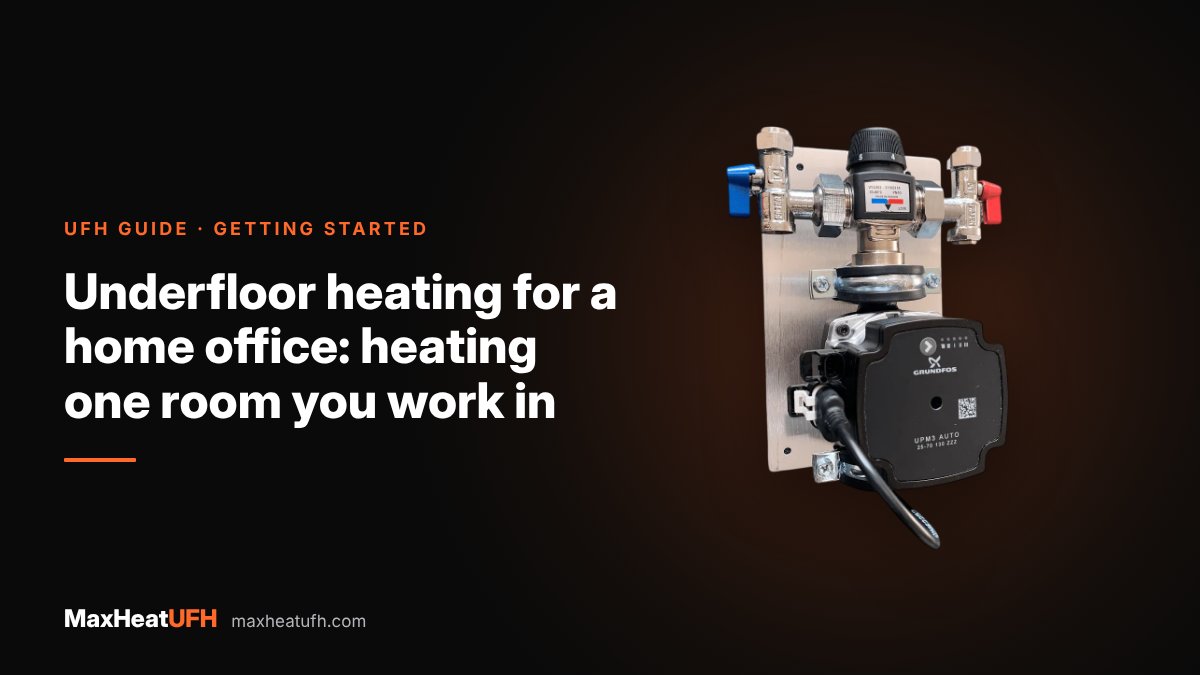
With a single-room mixing pump pack teed off the existing heating, or a small manifold of its own. A pack such as the single room mixing pump pack with Wilo A-rated pump blends boiler water down to floor temperature and pumps one or two loops, so an office can run from nearby radiator pipework without a full manifold install. Our guide to running UFH from radiator pipes covers the plumbing and the interlock.
For the floor itself, a retrofit office usually wants a low-height build-up. A routed overlay board such as MaxHeatPanel takes 16mm pipe with minimal height gain and adds insulation under the heat at the same time. Garden office instead of a spare room? See UFH for garden rooms, garages and basements.
Which controls make a home office cheap to run?
A programmable thermostat in the office, scheduled around your working week, separate from the rest of the house.
- Give the office its own thermostat and zone. One room, one schedule. A Heatmiser neoStat WiFi (water) or neoStat-e (electric) schedules the room independently and adjusts from your phone.
- Start the warm-up before you sit down. Set the comfort period to begin ahead of your start time; how far ahead depends on the floor build-up. An overlay floor responds in well under an hour; a thick screed needs longer.
- Set back, don't switch off, in winter. A setback of a few degrees overnight restarts faster and often costs less than reheating from cold each morning; see setback schedules.
- Drop the rest of the house. The saving comes from not heating empty rooms to office temperature all day.
- Electric systems: the final connection must be made by a qualified electrician (Part P, BS 7671).
Where should the desk and the heating go?
Heat the open floor and keep tall furniture off the heated area. Plan the mat or loops around where the desk pedestal, filing cabinets and bookcases will sit, because heat under sealed furniture is wasted and, for electric mats, trapped heat can push the element over temperature. A desk on legs with airflow underneath is fine above a heated floor, and a warm floor under the chair is exactly where you want the output. If the office has a big window or is over a garage, run the pipe or cable closer together near the cold edge so the room heats evenly.
Free design tool: sketch your office in MaxHeatUFH ProLoop and get a quick loop or mat layout with a fully priced kit for the room. Start your design
Frequently asked questions
What is the cheapest way to heat a home office?
Heat only that room, on its own thermostat and schedule. Whether electric or water UFH is cheaper depends on hours of use: electric is cheapest to install, water is cheapest to run for all-day working.
How much does electric underfloor heating cost per day in an office?
A 150W/m² mat over about 6 to 7m² draws roughly 1kW, which is about 26p per hour at full power on the October 2026 price cap. With a thermostat cycling in an insulated room, a working day costs well under the full-power figure.
Is there a legal minimum temperature for working from home?
The Workplace Regulations apply to employers' premises, and HSE's guidance gives 16°C as the usual minimum for seated indoor work. At home it is a sensible reference point rather than a legal duty on you.
Can I run underfloor heating in one room without heating the house?
Yes. An electric mat is independent by nature, and a water zone with a single-room mixing pack and its own thermostat calls the boiler only for that room.
How long before work should the heating come on?
Overlay and electric systems: often 30 to 60 minutes. Thick screed floors: longer, so use a setback overnight rather than fully off. Your thermostat's optimum-start feature can learn this for you.
Does a desk block underfloor heating?
A desk on open legs does not. Avoid heating under sealed-base furniture, and plan the layout before the floor goes down.
Sources: HSE: workplace temperature and the law (16°C minimum guidance), Ofgem energy price cap (October 2026 rates)
Products in this guide
Watch how each part works and how to fit it, and download its data sheet and install manual.
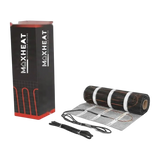


Every data sheet and manual: Product Library · All videos: MaxHeatUFH on YouTube
Design it in MaxHeatUFH ProLoop
Add your rooms, choose screed, overlay, joisted or electric, and get a free quick design and full kit list with prices.


