



Underfloor heating for accessible homes and older people
Why underfloor heating suits older people and wheelchair-accessible homes, the safety and floor finish points to plan, easy-to-use controls, and how a Disabled Facilities Grant can help pay for suitable heating.
Short answer: Underfloor heating suits older people and accessible homes well. There are no radiators to bump into or lean on, walls are free for grab rails and furniture, wheelchair users get clear floor space, and the floor stays gently warm rather than hot. The NHS advises heating your home to at least 18°C if you are 65 or over or less mobile, and underfloor heating holds a steady temperature easily. In England, a Disabled Facilities Grant of up to £30000 can pay for a heating system suited to a disabled person's needs.
As people get older, or live with a disability, the home has to work harder for them. Cold rooms are a real health risk. Radiators can be a hazard to someone unsteady on their feet, and they take up wall space that may be needed for rails, hoists or wider routes for a wheelchair or walking frame.
This guide explains why underfloor heating fits accessible design, the safety points, which floor systems and finishes to choose for level, slip-resistant floors, how to pick controls that are easy to use, and what grant help may be available. It is written for older homeowners, families planning adaptations and the installers and occupational therapists who advise them.
Is underfloor heating good for elderly people?
Yes. It gives an even, steady warmth across the whole room, with no hot surfaces, and it frees up wall and floor space. The NHS advises keeping your home at least 18°C if you are aged 65 or over, less mobile, or have a health condition such as heart or lung disease, and suggests keeping the bedroom at 18°C overnight if possible.
The benefits that matter most:
- No hot radiator surfaces. There is nothing to fall against, burn skin on or trap a hand behind.
- Warm floors, warm feet. The heat is at floor level, where it is most noticed by someone sitting for long periods.
- Even temperature. Fewer cold corners and draughts by windows, so the whole room is usable.
- Free walls. Grab rails, handrails, low shelving and furniture can go anywhere.
- Clear routes. No radiators narrowing hallways or doorways for a wheelchair or frame.
Is underfloor heating safe for people with poor circulation or sensitive skin?
A correctly designed system keeps the floor only gently warm. The European standard BS EN 1264 limits the floor surface to 29°C in occupied areas, 33°C in a bathroom kept at 24°C, and 35°C in edge zones by outside walls. Under wood and vinyl the limit is lower, at 27°C.
That is far cooler than a radiator surface. Even so, for someone with reduced feeling in their feet, it makes sense to:
- use thermostats with a floor probe so the floor temperature can be capped;
- avoid designing warmer edge zones in places where the person sits for long periods, such as by a favourite chair at a window;
- ask the installer to commission the system to the design flow temperature and record the settings.
Our guide to floor probes and air sensing explains how a floor limit works.
Is underfloor heating suitable for wheelchair-accessible homes?
Yes. It is one of the best heating choices for wheelchair users, because it leaves the whole floor clear and lets walls be used for turning space, rails and storage. It is also a natural partner to level-access wet rooms.
| Need | Radiators | Underfloor heating |
|---|---|---|
| Turning space and wide routes | Radiators stick out from walls | Nothing on walls or floor |
| Grab rails and hoist tracks | Walls with radiators are harder to use | All walls available |
| Level-access wet room | Floor stays wet and cold | Warm floor helps it dry |
| Hot surface contact | Possible | Floor surface limited by design |
The one thing to plan is floor height. Accessible homes need level thresholds between rooms. Choose a floor system that suits the existing levels rather than one that adds a step. See floor build-up heights for the figures for each system.
Which underfloor heating system is best for an adapted or accessible home?
It depends on whether the floor is being rebuilt or kept. Pick the system that gives you level floors and suits the heat source.
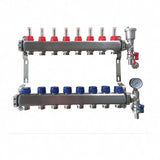
- New extension or a ground floor being dug out: water underfloor heating in screed, using clip rail or a castellated floor panel with PERT-EVOH pipe. This gives a very even temperature and works well with a heat pump.
- Existing floors you cannot raise much: a low-profile overlay board. Our low-profile overlay guide covers the options.
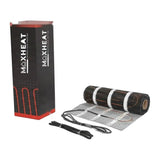
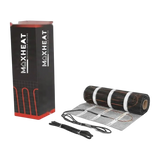
- A single bathroom or wet room adaptation: electric underfloor heating, such as a MaxHeatUFH 150W/m² mat, is quick to fit under tiles. Electric underfloor heating must be connected by a qualified electrician under Part P and BS 7671, and in a bathroom the zone rules apply.
Which floor finishes work best for older people and wheelchair users?
Choose a firm, smooth, slip-resistant finish that passes heat well. The floor finish matters as much for safety as for heat.
- Safety vinyl and LVT. Popular in adapted bathrooms and kitchens. Keep the floor below 27°C at the adhesive line, which is the floor covering industry agreed maximum. Switch the heating off at least 48 hours before the floor is laid and keep it off for 48 hours after, as flooring makers advise.
- Tiles. Excellent heat transfer. Choose a tile with a slip rating suited to wet areas.
- Engineered wood. Works over underfloor heating with a 27°C surface limit. Rugs on wood can be a trip hazard, so use them sparingly.
- Carpet. Thick carpet and underlay slow the heat and make wheelchairs harder to push. A low-tog, short-pile carpet is better if you want one.
What controls are easiest to use?
Large, clear thermostats with a simple schedule set once by the installer or a family member. Building Regulations guidance expects thermostatic room controls in each room for new heating systems, so every room will have a thermostat to choose.
- Set and forget. Underfloor heating works best at a steady temperature. Set a comfortable daytime and night temperature and leave it.
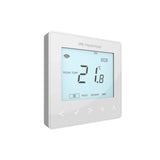
- Easy-to-read displays. A thermostat such as the Heatmiser neoStat V3 has a clear screen and can be locked so settings are not changed by accident.
- Remote help. With a hub and app, a family member can check and adjust the heating from elsewhere, with the occupant's agreement.
- Mounting height. Ask for thermostats to be placed where a seated person can reach and read them.
Can I get a grant for underfloor heating for a disabled person?
Possibly. A Disabled Facilities Grant from your council can pay for changes to a disabled person's home, and GOV.UK lists "provide a heating system suitable for your needs" and "adapt heating or lighting controls to make them easier to use" among the work it can cover.
| Nation | Disabled Facilities Grant maximum |
|---|---|
| England | Up to £30000 |
| Wales | Up to £36000 |
| Northern Ireland | Up to £25000 |
| Scotland | Not available; separate support for equipment and adaptations |
Some councils may give more. Most applicants are means tested, though disabled children and young people under 18 are not. Do not start work before the council approves your application, as GOV.UK warns you might not get any grant. The council must give a decision within 6 months.
On VAT: MaxHeatUFH charges 20% VAT on everything it sells. Some installations qualify for 0% VAT under HMRC's energy-saving materials relief (until 31 March 2027), but only when a qualifying installer supplies and installs a qualifying measure, such as insulation, heating controls or a heat pump. Buying kit supply-only from a merchant, including MaxHeatUFH, is charged at 20%. A separate 5% rate can apply to some grant-funded heating installations in the home of a person aged 60 or over or on certain benefits. Check HMRC's VAT Notice 708/6 for the exact rules. Other VAT reliefs for disabled people are outside this guide; ask your installer or HMRC. Our grants and VAT guide covers this in more detail.
Design your UFH system yourself in 3 minutes with MaxHeatUFH ProLoop and get an instant quick design and quote. Useful for pricing an adaptation before you apply for a grant. Start your design
Frequently asked questions
Is underfloor heating better than radiators for older people?
For most, yes. It removes hot surfaces and obstacles, frees walls for rails and furniture and keeps an even temperature. It warms up slowly, so it suits a steady schedule rather than switching on and off.
What temperature should an elderly person's home be?
The NHS advises at least 18°C if you are 65 or over, less mobile or have a health condition such as heart or lung disease, including the bedroom overnight if possible.
Can underfloor heating burn someone who has fallen?
A correctly designed system limits the floor surface to 29°C in occupied areas under BS EN 1264. That is a warm floor, not a burning one, though someone on the floor for a long time should still be helped up as soon as possible.
Does a Disabled Facilities Grant cover underfloor heating?
It can cover a heating system suitable for a disabled person's needs. Your council decides what the grant will pay for, so ask them and wait for approval before any work starts.
Is underfloor heating good in a level-access wet room?
Yes. A warm floor helps the wet room dry faster after use and is more comfortable for someone using a shower seat or wheelchair. Electric mats are common here; the connection must be made by a qualified electrician.
Can I fit underfloor heating without raising the floor?
Low-profile overlay systems add only a small amount of height. In a full refit you can dig down so the finished floor stays level with other rooms.
Does MaxHeatUFH install underfloor heating?
MaxHeatUFH supplies the kit and passes installs to vetted, approved installers. Request an installation quote.
Sources: NHS Dorset: staying well in cold weather, GOV.UK: Disabled Facilities Grants, GOV.UK: Disabled Facilities Grants, what you'll get, GOV.UK: Disabled Facilities Grants, how to claim, BCP Council: Disabled Facilities Grant means test, HMRC VAT Notice 708/6, Approved Document L volume 1, and manufacturers' installation guidance to BS EN 1264
Products in this guide
Watch how each part works and how to fit it, and download its data sheet and install manual.




Every data sheet and manual: Product Library · All videos: MaxHeatUFH on YouTube
Design it in MaxHeatUFH ProLoop
Add your rooms, choose screed, overlay, joisted or electric, and get a free quick design and full kit list with prices.


