








Underfloor heating vs infrared heating panels
Compares electric underfloor heating, water underfloor heating and infrared panels on running cost per kWh at the October 2026 price cap, fitting cost, comfort, heat pumps and grants.
Short answer: Electric underfloor heating and infrared panels cost the same per unit of heat, because both turn each kWh of electricity into one kWh of heat: 26.32p per kWh at the October 2026 price cap. Infrared panels are cheaper and quicker to fit and suit top-up or occasional heat. Water underfloor heating run from a heat pump costs far less per unit of heat, at roughly a third of that, and is the better choice for heating a whole home.
Infrared panels and underfloor heating (UFH) are often sold on the same promise: gentle, even warmth without radiators. They work in different ways, though, and the running cost depends much more on what powers them than on the emitter itself.
This guide compares electric UFH, water UFH and infrared panels on running cost, fitting cost, comfort and grants, then sets out when each one makes sense. All energy prices use the Ofgem October 2026 price cap for Great Britain, paid by direct debit.
What is the difference between underfloor heating and infrared panels?
Underfloor heating warms the whole floor, which then heats the room. Infrared panels are electric panels on a wall or ceiling that send out radiant heat to warm people, surfaces and objects rather than the air.
- Electric UFH uses heating mats or cables under the floor finish, wired to a room thermostat.
- Water UFH uses loops of pipe carrying warm water from a heat pump or boiler, fed from a manifold.
- Infrared panels are thin flat panels, sometimes made to look like mirrors or pictures, fixed to a wall or ceiling and wired to a thermostat.
Homebuilding & Renovating describes the feel of infrared heat as similar to the sun on a cold day. Underfloor heating gives a more even warmth from the ground up, with the floor surface held below 29°C in living areas under BS EN 1264.
Which is cheaper to run?
Water UFH with a heat pump is cheapest to run. Electric UFH and infrared panels cost the same per kWh of heat, because both are direct electric heating and both are 100% efficient at the point of use.
| System | Fuel price | Cost per kWh of heat |
|---|---|---|
| Infrared panels | 26.32p/kWh electricity | 26.32p |
| Electric UFH | 26.32p/kWh electricity | 26.32p |
| Water UFH, heat pump | 26.32p/kWh electricity | about 8.8p |
| Water UFH, gas boiler | 7.97p/kWh gas | about 8.7p |
The heat pump figure assumes about 3 units of heat for every unit of electricity, which is the figure the government gives. The gas figure assumes a boiler at 92% efficiency, the minimum Approved Document L sets for a new gas boiler on wet heating. Real results vary with the home, the controls and the flow temperature, and the table leaves out standing charges.
So the useful question is not which emitter is more efficient. It is how many kWh of heat the room needs, and what that heat costs. Infrared makers argue their panels need less heat to feel comfortable, but that depends on the room, and any system should be sized from a proper heat loss calculation. For room-by-room sums on electric floors, see our guide to electric UFH running costs per m².
Which is cheaper to install?
Infrared panels are usually cheapest to fit, then electric UFH, then water UFH. Panels go on the wall or ceiling, so there is no floor work at all.
| System | Typical cost |
|---|---|
| Infrared panel, standard | £120 to £180 per panel |
| Infrared panel, decorative | £300 to £500 per panel |
| Electric UFH, fitted | £50 to £85 per m² |
| Water UFH, fitted | £85 to £110 per m² |
Panel prices are from Homebuilding & Renovating. UFH fitted costs are the ranges the Energy Saving Trust quotes from a trades directory. Fitting UFH costs least when you are already replacing the floor, such as in a new kitchen or bathroom.
If you buy the kit yourself, you need MaxHeatUFH electric heating mats and a Heatmiser neoStat-e floor heating thermostat. The final electrical connection must be made by a qualified electrician.
Does the heat feel different?
Yes. Infrared panels heat what they face, so you feel warm quickly in front of a panel but less so behind furniture or out of its line. Underfloor heating warms from the whole floor area, so the heat is spread across the room and there is no hot spot.
- Warm-up. Infrared panels and thin electric mats respond fastest. Water UFH in a deep screed takes longest but holds its heat. See our guide to UFH warm-up time.
- Output limit. A floor can only give out about 100W/m² in a living room before the surface passes 29°C. Very cold rooms may need more than the floor can give. See our guide to UFH heat output.
- Space. UFH is out of sight and leaves every wall free. Panels use wall or ceiling space, though ceiling panels keep the walls clear.
- Floor finish. UFH output drops under thick carpet. Infrared panels do not care what is on the floor.
Which works with a heat pump and grants?
Only water UFH works with a heat pump. Infrared panels and electric UFH are direct electric heating, so they cannot use a heat pump and cannot benefit from its lower cost per unit of heat.
The Energy Saving Trust says the Boiler Upgrade Scheme gives up to £7500 towards an air, ground or water source heat pump in England and Wales, through an MCS certified installer. The grant is for the heat pump installation, not for infrared panels. Our guide to underfloor heating with a heat pump explains flow temperatures and pipe spacing.
VAT: HMRC applies 0% VAT to qualifying energy-saving materials, including heat pumps, until 31 March 2027, but only where the same business supplies and installs them. Supply-only goods are standard-rated. MaxHeatUFH charges 20% VAT on every product it sells, so UFH kit bought supply-only from any merchant, including MaxHeatUFH, includes 20% VAT. HMRC's notice does not list underfloor heating, and radiators fitted as part of a conventional system are standard-rated. See our guide to UFH grants and VAT.
What about installation and safety?
Both need an electrician, but infrared panels are simpler. Homebuilding & Renovating notes that any qualified electrician can fit panels, often onto existing wiring, and there are no pipes or pumps to maintain.
Electric UFH must be connected by a qualified electrician under Part P and BS 7671. A new circuit is notifiable building work in England and Wales. BS 7671 Section 753 requires RCD protection not exceeding 30mA for floor heating circuits. Water UFH needs a heating engineer, and any boiler work must be done by a Gas Safe registered engineer.
When should I choose each one?
Choose by the job the heating has to do.
- Choose water UFH for a whole floor, a new build or an extension, and any home with or planning a heat pump.
- Choose electric UFH for a bathroom, en suite or small kitchen where you want a warm floor and are already relaying it.
- Choose infrared panels for occasional or top-up heat, such as a home office or garden room, where you cannot touch the floor.
Many homes use more than one. Water UFH on the ground floor with a heat pump, and an electric mat in a loft en suite, is a common mix. Our guide to water vs electric underfloor heating helps with that choice.
Design your UFH system yourself in 3 minutes with MaxHeatUFH ProLoop and get an instant quick design and quote. Add your rooms and it gives you a quick UFH design, with the circuits laid out from the manifold you place, plus a fully priced kit list to compare against other options. Start your design
Frequently asked questions
Is infrared heating cheaper than underfloor heating?
Not per unit of heat. Infrared panels and electric UFH both cost 26.32p per kWh at the October 2026 price cap. Water UFH with a heat pump costs roughly a third of that per kWh of heat.
Are infrared panels more efficient than electric underfloor heating?
No. Both turn all the electricity they use into heat. Any difference in running cost comes from how much heat each room needs and how the controls are set.
Can infrared panels run off a heat pump?
No. Infrared panels are electric emitters. A heat pump heats water, so it needs water emitters such as underfloor heating or radiators.
Can I use infrared panels and underfloor heating together?
Yes. Some homes use UFH as the main heating and an infrared panel for quick top-up heat in a room used only now and then.
Do infrared panels qualify for the Boiler Upgrade Scheme?
No. The scheme covers heat pumps and, in rural off-gas homes, biomass boilers. It does not cover infrared panels or electric underfloor heating.
Which feels warmer, infrared or underfloor heating?
Infrared feels warm quickly when you are in front of the panel. Underfloor heating feels more even across the room, with a warm floor underfoot.
Sources: Ofgem energy price cap, gov.uk: heat pumps explained, Approved Document L Volume 1, Homebuilding & Renovating: infrared heating, Energy Saving Trust: underfloor heating, Energy Saving Trust: Boiler Upgrade Scheme, HMRC VAT Notice 708/6, IET Wiring Matters: BS 7671 Section 753, Planning Portal: electrics and Part P
Products in this guide
Watch how each part works and how to fit it, and download its data sheet and install manual.
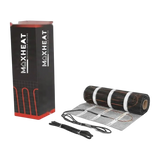
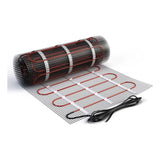


Every data sheet and manual: Product Library · All videos: MaxHeatUFH on YouTube
Design it in MaxHeatUFH ProLoop
Add your rooms, choose screed, overlay, joisted or electric, and get a free quick design and full kit list with prices.


