








Underfloor heating with a system boiler and hot water cylinder (S-plan, Y-plan, priority)
How to add underfloor heating to a system boiler and hot water cylinder: S-plan, Y-plan and W-plan compared, plumbing and wiring the UFH zone, Part L control rules and hot water priority.
Short answer: On a system boiler with a hot water cylinder, underfloor heating is normally added as its own heating zone: a 2-port zone valve on the primary feeds the UFH manifold, and a blending valve pump pack brings the boiler's flow down to floor temperature. This is an S-plan layout, and it lets the boiler heat the cylinder at about 60°C while the floor runs at 55°C or less. The UFH wiring centre's volt-free boiler contact opens the UFH zone valve, and the valve's end switch fires the boiler and its pump.
A system boiler heats a separate hot water cylinder as well as the central heating, so the controls have to decide which of the two gets the boiler's heat and when. The common UK layouts are called S-plan, Y-plan and W-plan, named after old wiring diagrams from one controls maker. Each handles priority between heating and hot water in a different way, and that matters when you add underfloor heating (UFH).
This guide explains each plan, how to plumb and wire a UFH manifold into it, what Building Regulations expect from the controls, and how hot water priority affects a heated floor. Boiler work must be done by a Gas Safe engineer, and wiring by a qualified electrician. For a combi instead, see our guide to connecting UFH to a combi boiler.
What is the difference between S-plan, Y-plan and W-plan?
They differ in the valves used and whether heating and hot water can run at the same time. City & Guilds plumbing training material summarises them like this:
| Layout | Valves | Heating and hot water together? | UFH fit |
|---|---|---|---|
| S-plan | One 2-port valve per zone | Yes, each zone on its own | Best: add a valve for the UFH zone |
| S-plan plus | Three or more 2-port valves | Yes | Radiators, UFH and cylinder each zoned |
| Y-plan | One 3-port mid-position valve | Yes, through the mid position | Workable, but more wiring changes |
| W-plan | 3-port diverter valve | No, hot water has priority | Works; floor waits while cylinder heats |
In an S-plan, the cylinder thermostat opens the hot water valve and the room thermostat opens the heating valve. In a Y-plan, a single 3-port mid-position valve sends water to the cylinder, the heating or both. The training notes also say that a property over 150m² should have an additional heating zone valve, which in practice gives separate upstairs and downstairs zones.
How do I add underfloor heating to an S-plan system?
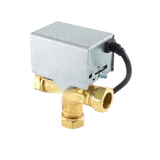
Add a new 2-port zone valve on the primary flow to the UFH, alongside the existing heating and hot water valves. The floor then becomes one more zone that the boiler serves whenever it calls.
- Tee off the primary flow and return after the pump and before the existing zone valves.
- Fit a 2-port zone valve on the UFH flow, in 22mm for most homes.
- Run the primaries to the manifold and fit isolating ball valves on the flow and return.
- Fit a blending valve pump pack on the manifold. It mixes boiler water down to a set temperature between 20 and 55°C and pumps it round the loops.
- Check the bypass. Fit or keep an automatic bypass if the boiler maker requires one, so the boiler has flow when every valve closes.
Why the blending pack matters: a system boiler heating a cylinder has to make water hot enough to store at 60°C, which HSE guidance gives as the minimum to control legionella. That is far too hot for a screed or a timber floor. The pack lets the boiler stay hot for the cylinder while the floor gets only what it needs. Our guide to mixing and blending valves covers setting it up.
How do I wire UFH into an S-plan?
The UFH wiring centre opens the UFH zone valve, and the zone valve tells the boiler to fire. The boiler then responds to the UFH exactly as it does to the radiators or cylinder.
- Thermostats to wiring centre. Each room thermostat switches its own zone, which opens the actuators on that room's loops.
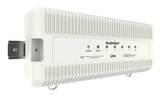
- Wiring centre to zone valve. On the Heatmiser UH8, the boiler output is a volt-free switch. Feed a permanent live into it and take the switched live out to the UFH zone valve's motor.
- Zone valve end switch to boiler. When the valve is fully open, its end switch closes and sends the switched live that fires the boiler and its pump. One boiler maker's UFH bulletin uses the same principle.
- UFH pump. The UH8's pump output gives 230V to the manifold pump when any UFH zone calls. Heatmiser recommends feeding it through a high-limit thermostat on the manifold.
Heatmiser rates the UH8 relays at 3A each and 5A for the whole board, so keep the valve motor and pump within that. It also notes that mid-position valves, and valves that need a separate closing signal, need a changeover relay. Our Heatmiser UH4 and UH8 wiring guide has the terminal-by-terminal detail.
Can I add UFH to a Y-plan system?
Yes, but the simplest reliable route is to convert the heating side to an S-plan style zone. A Y-plan has one 3-port valve for heating and hot water. You can leave that in place and add a 2-port zone valve for the UFH on the heating outlet, or replace the 3-port valve with two 2-port valves and add a third for the floor.
The wiring is the harder part. The mid-position valve is driven by the programmer and both thermostats together, and the UH8 cannot drive it directly because of the closing signal. Converting to S-plan plus is often cleaner, especially when the house now has three or more zones. Wiring should be done by a qualified electrician.
What do Building Regulations require for the controls?
Part L expects independent time and temperature control for each heating zone, separate control of hot water, and a boiler interlock. BEAMA's Part L heating controls guide summarises the main points:
- Zones. Each zone should have its own circuit with independent time and temperature control. Homes of 150m² or more are expected to have at least two heating zones.
- Room control. On a boiler replacement, each room should have thermostatic control of its heat output. With UFH, a thermostat per room on the wiring centre does this.
- Hot water. The cylinder should be on its own timed circuit with a cylinder thermostat. A cylinder thermostat should always be fitted with a replacement cylinder.
- Boiler interlock. When nothing calls for heating or hot water, the boiler and pump must switch off. The end switch wiring above gives you this.
- Flow temperature. A full new or replacement heating system should be sized to run at a maximum flow temperature of 55°C.
For hot water timing, a programmer such as the Heatmiser neoStat-HW gives four hot water times a day and has changeover contacts for valves that need them.
Does hot water priority affect underfloor heating?
Only a little, because a heated floor stores heat. On a W-plan, the boiler serves only the cylinder while it reheats, so the floor gets nothing for that time. On an S-plan or Y-plan, both can run together and share the boiler's output.
A screeded floor holds a lot of heat and changes temperature slowly, so a short break while the cylinder reheats is rarely noticed. Low-mass overlay floors respond faster and may cool a little. If you run a W-plan, set hot water times away from the floor's main heat-up period. Our guide to thermal mass and UFH explains why floors behave this way.
Also check the boiler's return temperature. A condensing boiler recovers latent heat only when its return is below about 55°C. A well-set blending pack returns cool water from the floor, which helps, but a hot cylinder coil will push the return up while the cylinder reheats.
Design your UFH system yourself in 3 minutes with MaxHeatUFH ProLoop and get an instant quick design and quote. Start your design
Frequently asked questions
Can I run underfloor heating off a system boiler?
Yes. Add the floor as its own zone with a 2-port valve, and fit a blending valve pump pack at the manifold so the floor runs cooler than the boiler.
Is S-plan or Y-plan better for underfloor heating?
S-plan is usually easier, because the floor just becomes another 2-port zone. A Y-plan can work, but the mid-position valve makes the wiring harder.
Does the UFH wiring centre fire the boiler directly?
It can, through its volt-free boiler contact, but on an S-plan it normally opens the UFH zone valve and the valve's end switch fires the boiler. That keeps the boiler interlock working for every zone.
What temperature should the boiler be set to with a cylinder and UFH?
Hot enough to store hot water at 60°C, which usually means a higher boiler flow. The blending valve on the manifold then reduces it to the floor's set temperature, 55°C or lower.
Do I need a separate pump for the underfloor heating?
Yes, in most cases. The pump on the manifold pump pack moves water round the loops. The boiler's pump only delivers water to the zone valves.
How many zone valves do I need?
One for hot water and one for each heating zone, such as radiators and UFH. Homes of 150m² or more are expected to have at least two heating zones.
Does underfloor heating slow down my hot water?
Not on an S-plan or Y-plan, where both can run together. On a W-plan, hot water takes priority and the floor waits until the cylinder is hot.
Sources: City & Guilds 9189 heating systems presentation (S, Y, W and C plans), BEAMA Part L heating controls guidance, Heatmiser UH8 manual, HSE: hot and cold water systems
Products in this guide
Watch how each part works and how to fit it, and download its data sheet and install manual.




Every data sheet and manual: Product Library · All videos: MaxHeatUFH on YouTube

Design it in MaxHeatUFH ProLoop
Add your rooms, choose screed, overlay, joisted or electric, and get a free quick design and full kit list with prices.


