








Underfloor heating and pets: is it safe for dogs, cats and reptiles?
Why underfloor heating is safe for dogs and cats, the floor temperature limits that keep it that way, where to put pet beds and crates, and why reptiles still need their own thermostat-controlled heat source.
Short answer: Yes. A properly designed underfloor heating system is safe for dogs and cats, because the floor is only gently warm: BS EN 1264 limits the surface to 29°C in occupied areas. Pets can lie on it or move away, and there are no hot radiator surfaces to touch. The one exception is reptiles: a warm floor is no substitute for a thermostat-controlled heat source inside the vivarium.
Many pet owners worry that a heated floor could overheat a dog lying on it all day, burn a cat's paws or harm a gecko in a tank on the floor. The worry makes sense, but underfloor heating works at low surface temperatures. It warms a large area a little, rather than a small area a lot like a radiator or a fire.
This guide covers the floor temperature limits that keep pets safe, how to set up water and electric systems in a home with animals, where pet beds and crates should go, which floor finishes suit pets, and why reptiles need their own heating. It applies to both water (wet) and electric underfloor heating.
Is underfloor heating safe for dogs and cats?
Yes, as long as the floor stays within the normal design limits. The European standard for water underfloor heating, BS EN 1264, sets a maximum floor surface temperature of 29°C in the areas people (and pets) occupy. That is a warm floor, not a hot one.
There are some real benefits for animals too:
- No hot surfaces. There are no radiators for a dog to lean against or a cat to sleep on top of.
- Even warmth at floor level. Pets live closer to the floor than we do. With underfloor heating the warmest air is at the level where they lie, not up by the ceiling.
- Fewer cold spots. A whole floor gives out heat, so draughty corners by the back door are less of a problem.
- A dry floor dries faster. Wet paw prints and mopped tiles dry quicker on a warm floor.
The key point is choice. A dog or cat that feels too warm will move to a cooler spot, a rug or a bed. Make sure every pet can do that, which is covered in the section on beds and crates below.
What floor temperature is safe for pets?
Use the same limits that apply to people: 29°C for the main floor, lower under wood and vinyl. The table shows the figures from BS EN 1264 and from flooring guidance.
| Area or floor finish | Maximum floor surface temperature | Source of the limit |
|---|---|---|
| Main occupied floor area | 29°C | BS EN 1264 |
| Bathrooms | Room temperature + 9K (33°C in a 24°C room) | BS EN 1264 |
| Edge zones by outside walls and glazing | 35°C | BS EN 1264 |
| Wood flooring | 27°C | Flooring and UFH manufacturer guidance |
| Vinyl, LVT and safety flooring | 27°C at the adhesive line | Floor covering industry agreed maximum |
Edge zones are the strips along cold outside walls and big windows where a designer may run the pipe closer. Pets rarely settle right against a patio door, but if your dog always sleeps in a bay window, ask for that area to be designed to the 29°C limit rather than as a warmer edge zone.
In practice most homes run well below these maximums. The floor only needs to be a few degrees warmer than the room to heat it. For typical settings, see our guide to underfloor heating temperature settings.
How do I keep the floor at a pet-safe temperature?
Design the system correctly, then let the controls hold it there. The steps differ slightly between water and electric systems.
Water underfloor heating
- The mixing or blending valve on the manifold sets the water temperature going into the floor. Set it to the design flow temperature, not higher.
- Room thermostats switch each zone on and off. A thermostat with a floor probe can also cap the floor temperature, which is useful in a room where a pet sleeps on the floor.
- With a heat pump the flow temperature is usually low anyway, which keeps the floor surface mild.
Electric underfloor heating
- Use a thermostat with a floor probe, such as the Heatmiser neoStat-e. Set the floor limit to suit the floor finish.
- Pick a sensible mat output for the room. A 150W/m² mat is a common choice for tiled floors; the thermostat, not the mat, decides how warm the floor gets.
- The final electrical connection must be made by a qualified electrician under Part P and BS 7671.
Our guide to floor probes and air sensing explains how floor limits work on different thermostats.
Can my pet chew or damage underfloor heating?
Not once it is installed. Water pipe is buried in screed or locked in boards under the floor finish, and electric heating cable sits in tile adhesive or levelling compound under tiles or other flooring. Neither is reachable by a pet.
The places to think about are the few things above the floor:
- Thermostats. Mount them on the wall at the normal height, out of reach of a dog standing on its back legs.
- Cold tails and probe wires on electric systems run up the wall to the thermostat. They should be inside the wall or in conduit, never left loose at skirting level.
- The manifold. On a water system the manifold, pump and wiring centre live in a cupboard or cabinet. Keep it closed so a curious cat cannot get at the wiring or actuators.
Claws do not reach the heating, but they can mark some floor finishes. That is a flooring question rather than a heating one.
Where should pet beds, crates and rugs go?
Put them where your pet can step off onto a cooler surface if it wants to. Anything that sits flat on a heated floor traps heat under it, both for the animal and for the floor.
- Pet beds. A thick, padded bed insulates your pet from the floor, which is fine. It also stops heat getting into the room from that patch. A small bed makes little difference.
- Crates. Make sure there is a bed or mat inside so the pet is not forced to lie on the heated floor with no way to move off it. Leave the crate where part of it sits on an unheated or cooler area if you can.
- Large rugs. A thick rug reduces how much heat comes through. Choose a thin rug with a low tog rating if it covers a large area.
- Feeding stations. Wet food and water bowls are better away from the warmest areas, such as edge zones by glazing.
For more detail, read rugs and furniture on underfloor heating.
Can I use underfloor heating to heat a reptile vivarium?
No. Reptiles need a temperature gradient inside their enclosure, with a warm end and a cool end, and the heat must come from a thermostat-controlled source in the vivarium. A warm room floor cannot provide that.
The RSPCA's care advice for common pet reptiles sets out why:
- A thermogradient is created by putting the heat source at one end of the vivarium and leaving the other end cool, so the animal chooses where to sit.
- All heat sources should be connected to a thermostat, and both ends checked daily with a thermometer.
- For a leopard gecko the RSPCA gives a basking end of 28 to 30°C and a cool end of 24 to 26°C. For a royal python the basking zone is 30 to 32°C, with the cool end at 24 to 26°C.
Underfloor heating can help by keeping the room itself warm and steady. The RSPCA notes that a leopard gecko needs supplementary heat at night if the room drops below 18°C, so a well-heated room can reduce how hard the vivarium heater works. Do not stand a glass tank directly on a heated floor and count on that to warm it. The whole base would warm, which removes the cool end the animal needs. Raise the tank on a stand or furniture and use the reptile heat source the care sheet specifies.
The same applies to other animals kept in tanks or hutches indoors, such as fish, small mammals and birds. Follow the species care advice and treat underfloor heating as room heating only.
Which floor finishes suit pets and underfloor heating?
Tile and stone are the easiest. They pass heat through well, are easy to clean and are not damaged by claws or water bowls. Other finishes work too, within their temperature limits.
| Floor finish | With pets | With underfloor heating |
|---|---|---|
| Porcelain or ceramic tile, stone | Hard wearing, easy to wipe | Excellent heat transfer |
| LVT and vinyl | Quiet, water resistant | Good; 27°C limit at the adhesive line |
| Engineered wood | Can show claw marks | Good; 27°C surface limit |
| Carpet | Soft, holds hair | Works if the combined tog of carpet and underlay is low |
For tiled floors over boards, a tile-direct board such as MaxHeatPanel keeps the build-up low. For screed floors, use our PERT-EVOH oxygen barrier pipe.
Design your UFH system yourself in 3 minutes with MaxHeatUFH ProLoop and get an instant quick design and quote. Start your design
Frequently asked questions
Is underfloor heating bad for dogs' joints?
There is no reason a gently warm floor would harm joints. If your vet has given advice about warmth for an older dog, a padded bed on a heated floor gives the dog a warm room and a soft place to lie.
Can a dog overheat lying on underfloor heating?
Not on a correctly designed system, as the floor is limited to 29°C in occupied areas. The risk comes from forcing a pet to stay on the floor, for example in a crate with no bed. Always give a pet a way to move to a cooler spot.
Will underfloor heating burn my cat's paws?
No. Floor surface temperatures stay within the BS EN 1264 limits, far below what a radiator surface reaches. Electric systems should have a floor probe so the thermostat can cap the floor temperature.
Is underfloor heating good for pet hair and dust?
It helps a little. There are no radiators for hair and dust to collect behind or on top of, and hard floors over underfloor heating are quick to sweep or vacuum.
Can I put a reptile tank on a heated floor?
It is better not to. A heated floor warms the whole base of the tank and removes the cool end reptiles need. Raise the tank and use a thermostat-controlled heat source inside it, as the RSPCA advises.
Should I turn the underfloor heating off when I leave a pet at home?
No need. Underfloor heating works best at a steady temperature, so leave the normal schedule running. A small setback is fine; a full shut-off makes the house cold for the pet and slow to warm up again.
Does MaxHeatUFH install underfloor heating?
MaxHeatUFH supplies the kit and passes installs to vetted, approved installers. You can ask for an installation quote.
Products in this guide
Watch how each part works and how to fit it, and download its data sheet and install manual.

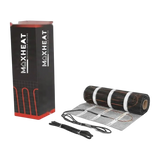


Every data sheet and manual: Product Library · All videos: MaxHeatUFH on YouTube

Design it in MaxHeatUFH ProLoop
Add your rooms, choose screed, overlay, joisted or electric, and get a free quick design and full kit list with prices.


