Carpet on underfloor heating: tog rating, underlay and heat output
Carpet works over water underfloor heating if carpet and underlay total under 2.5 tog. How tog works, how much heat carpet holds back, how to add up your own carpet and underlay, and what to put underneath.
Short answer: Yes, you can have carpet over water underfloor heating if the carpet and underlay together come to less than 2.5 tog (0.25m²K/W). That limit comes from research by the Carpet Foundation and the Underfloor Heating Manufacturers Association. Lower is better: in one maker's table, carpet and underlay of 1.5 tog cut the floor's output from 94W/m² (tile) to 55W/m² at the same water temperature. Pick a carpet with a published tog value and an underlay made for underfloor heating, at about 1 tog or less.
Carpet is the warmest finish to walk on and the hardest for underfloor heating (UFH) to push heat through. It works like a blanket over the heated floor. The heat still gets through, but more slowly, and the floor needs warmer water or closer pipes to give the same output as tile or wood.
This guide explains tog ratings, the limits that apply, how much heat carpet holds back, how to add up your own carpet and underlay, and what to put under the carpet. For all floor finishes compared, see underfloor heating under tiles, LVT, laminate, wood and carpet.
Can you have carpet over underfloor heating?
Yes. Research by the Carpet Foundation and the Underfloor Heating Manufacturers Association (UHMA) found that most carpet can be used over UFH without impairing the system, as long as the carpet and underlay are under 2.5 tog combined. Two major UK carpet makers both quote this limit.
The UHMA also had 19 carpet and underlay combinations tested at BSRIA, at flow temperatures of 40, 50 and 60°C. The tested combinations behaved as if their resistance were about 1 tog lower than the published figures. The report did not clear every carpet above 2.5 tog, but it showed the limit has some safety margin built in.
Carpet changes how the room feels as well as how much heat it gets. One carpet maker says a carpeted floor takes slightly longer to heat up at first but stays warm for longer. Plan for that in your heating schedule.
What is a tog rating, and what is the limit for underfloor heating?
Tog is a measure of thermal resistance, which is how strongly a layer holds back heat. One tog equals 0.1m²K/W. Tog values add up, so the carpet's tog plus the underlay's tog is the figure that matters.
| Limit | Value | Where it comes from |
|---|---|---|
| Carpet and underlay together | Below 2.5 tog (0.25m²K/W) | Carpet Foundation and UHMA research |
| Standard floor covering in UFH design | 1.0 tog (0.10m²K/W) | BS EN 1264, for living rooms |
| Higher floor covering, by agreement | Up to 1.5 tog (0.15m²K/W) | BS EN 1264, to be agreed separately |
| Typical UFH underlay | About 1 tog | BEAMA guidance |
So there are two numbers to keep in mind. 2.5 tog is the most the carpet industry accepts. 1.0 to 1.5 tog is what a heating designer assumes by default. If your carpet and underlay come to more than the designer assumed, tell them, because the system will need warmer water or closer pipes to give the same heat. Another carpet maker makes the same point: tell the heating maker the combined tog so the right settings and calculations are used.
How much heat does carpet block?
A lot more than tile or wood. One UFH maker publishes outputs for the same floor, a 65mm sand and cement screed with pipes at 150mm centres, with three floor finishes:
| Floor finish | 50/40°C water | 45/35°C water | 40/30°C water |
|---|---|---|---|
| Tile (0.01m²K/W) | 118W/m² | 94W/m² | 69W/m² |
| 15mm wood (0.10m²K/W) | 83W/m² | 66W/m² | 48W/m² |
| Carpet and underlay (0.15m²K/W) | 70W/m² | 55W/m² | 41W/m² |
Read across the table. The carpeted floor at 50/40°C gives about the same as the tiled floor at 40/30°C. In other words, 1.5 tog of carpet costs you about 10°C of water temperature. A thicker carpet costs more.
That matters most with a heat pump, which you want to run as cool as you can. If the room's heat loss is close to what the carpeted floor can give, choose a lower-tog carpet, use closer pipe centres, or improve the insulation. Our guides to heat loss and UFH output and UFH with a heat pump show how to check.
How do I work out the tog of my carpet and underlay?
Look up both figures on the makers' data sheets and add them. Carpet makers usually publish a tog value per range, and underlays sold for UFH quote theirs on the label.
If you do not have the figures yet, the CIBSE values published by one UFH maker are a useful guide:
| Floor finish | Tog | m²K/W |
|---|---|---|
| 9mm carpet tile, or an 8mm underlay alone | 1.0 | 0.10 |
| Medium pile carpet | 1.5 | 0.15 |
| Deep pile carpet with 5mm underlay | 2.0 | 0.20 |
| Deep pile carpet with 8mm underlay | 2.5 | 0.25 |
Two worked examples with published products:
- Wool-rich carpet on a UFH underlay. One carpet maker gives its 80% wool, 20% nylon carpets 1.4 to 2.3 tog. One underlay made for UFH is 1.3 tog. The lightest of those carpets on it gives 1.4 + 1.3 = 2.7 tog, which is over the limit. On an underlay of about 1 tog, the total is about 2.4 tog: just under.
- Medium pile carpet on a thin underlay. A 1.5 tog carpet on a 1 tog underlay totals 2.5 tog, which is at the limit. Every tenth of a tog you save lets the system run a little cooler.
One manufacturer notes that carpet tog values are tested to BS 4745 and underlay values to BS EN ISO 8302. If a product does not give a tested figure, ask for one before you buy.
Which carpet and underlay work best with underfloor heating?
A carpet with a low, published tog value on a thin, dense underlay sold for UFH. The underlay is often where the easiest savings are.
- Carpet: one carpet maker says all its wool, wool blend and polypropylene carpets meet the requirements for UFH. Thinner, denser carpets usually have lower tog values than deep, soft piles, as the CIBSE table shows.
- Underlay: choose one labelled for UFH, with a tested tog value. BEAMA notes the underlay must let enough heat through while still supporting the carpet over its life, so the thinnest is not always the best.
- Fitting: the BSRIA tests found that fixing carpet with double-sided tape or spray adhesive improves contact with the floor and can lower the real-life resistance further.
- Wear: the same tests found carpets lose resistance as they wear and compact. A new carpet is at its highest tog.
Rugs laid on top of carpet add their tog to the total. See rugs and furniture on underfloor heating for the limits.
What floor system should go under a carpet?
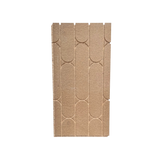
Any water UFH system works under carpet, as long as the surface is flat and firm. Screed gives the most even surface. On a joisted floor, MaxHeatChip routed chipboard with our 6mm foil-backed top board gives a flat base for the gripper and underlay, and the foil spreads heat between the pipe runs.
Because carpet holds back so much heat, closer pipe centres help, since they let the floor give the same output at a lower water temperature. See underfloor heating pipe centres.
Our electric mats and loose cable are made for tile and stone floors, laid in tile adhesive, and are not for use under carpet. The Tile Association also warns against thick rugs of 1.0 tog or more over electric undertile heating. For a carpeted room, use water UFH.
How should I set the heating in a carpeted room?
Start the heating earlier and let it run steadily. A carpeted floor responds more slowly, so short bursts of heat do little. Our guide to how long UFH takes to warm up explains schedules and set-back temperatures.
Set the flow temperature to what the design calls for with the carpet's tog included. If the room feels cool, check the carpet and underlay tog before you turn the water up. A thick underlay is a common cause of a weak carpeted floor.
Design your UFH system yourself in 3 minutes with MaxHeatUFH ProLoop and get an instant quick design and quote. Set carpet as the finish to see the effect. Start your design
Frequently asked questions
What is the maximum tog for carpet on underfloor heating?
Carpet and underlay together should be below 2.5 tog (0.25m²K/W). That is a maximum, not a target. Most UFH designs assume 1.0 to 1.5 tog.
Is underfloor heating worth it with carpet?
Yes, if the carpet and underlay are low tog and the system is designed for them. Expect the floor to give less heat at the same water temperature than tile or wood, and to warm up more slowly.
What tog underlay should I use with underfloor heating?
About 1 tog or less, labelled as suitable for UFH. Add it to the carpet's tog and check the total is under 2.5.
Does carpet stop underfloor heating working?
No, but it reduces output. In one maker's table, a 1.5 tog carpet and underlay give 55W/m² where tile gives 94W/m² at the same water temperature.
Can I use thick carpet on underfloor heating?
Only if its tog plus the underlay's stays under 2.5. A deep pile carpet on an 8mm underlay is about 2.5 tog in CIBSE figures, which is at the limit.
Can electric underfloor heating go under carpet?
Not with our electric mats or cable, which are made for tile and stone. Use water UFH under carpet.
Where do I find a carpet's tog rating?
On the carpet maker's website or data sheet. Most major carpet makers publish tog values for their ranges. If you cannot find one, ask the retailer for the tested figure.
Sources: Modern Building Services: UHMA carpet tests at BSRIA, BEAMA: choosing your floor covering for UFH, The Tile Association: tiling to heated floors
Products in this guide
Watch how each part works and how to fit it, and download its data sheet and install manual.


Every data sheet and manual: Product Library · All videos: MaxHeatUFH on YouTube

Design it in MaxHeatUFH ProLoop
Add your rooms, choose screed, overlay, joisted or electric, and get a free quick design and full kit list with prices.