Magnetic filters and water quality for underfloor heating systems
Why BS 7593:2019 calls for an in-line magnetic filter and full water treatment on heating systems, why sludge hits UFH loops hardest, and the clean, inhibit, test and re-dose regime that protects the system.
Short answer: Yes, a magnetic filter belongs on a heating system with underfloor heating. BS 7593:2019 calls for an in-line filter on the return to the boiler or heat pump, and Benchmark guidance notes this has been a requirement since 2019. The filter catches magnetite, the fine black iron oxide from corrosion, before it reaches the heat exchanger and pump. Pair it with the full water treatment regime: clean and flush, inhibitor, an annual check, and re-dosing or a lab test every five years.
Underfloor heating gives sludge more places to hide than any radiator system: hundreds of metres of small-bore pipe, run at low temperatures, with flow deliberately throttled down at the manifold. Once magnetite settles in a loop, you feel it as a cool strip of floor and see it as a flow meter that will not reach its setting.
The fix is cheap and standardised. British Standard BS 7593:2019 sets out the whole water treatment regime for domestic heating systems, and a magnetic filter is one part of it, not a substitute for the rest. This guide covers what the filter does, where it goes on a UFH system, and the rest of the regime that keeps the water clean for the life of the floor.
What does a magnetic filter actually do?
It pulls magnetite out of the circulating water with a magnet. Magnetite is black iron oxide, produced when steel and iron components corrode inside the system, and its particles are small enough to pass straight through an ordinary strainer. Benchmark guidance makes the distinction: filters remove sub-micron particles such as magnetite, while strainers only collect larger debris.
Left in the water, magnetite does three kinds of damage:
- It settles where flow is slowest, which in a UFH system means the loops themselves and the bottom of the manifold, cutting flow and output.
- It grinds moving parts. The circulation pump turns abrasive water all day, and heat pump plate heat exchangers have narrow waterways that block easily; Benchmark notes heat pumps are especially vulnerable, and that poor water quality quickly cuts their efficiency and raises running costs.
- It signals active corrosion. A filter that fills quickly tells you oxygen is getting in or the inhibitor is spent, which is worth knowing before the pipework thins.
The filter sits in the flow and collects the magnetite on its magnet; at each service it is opened, wiped clean and put back.
Is a magnetic filter required by regulations?
BS 7593:2019 says to install an in-line filter to protect system components, and Benchmark guidance states an inline filter on the return to the appliance has been required since 2019. Approved Document L backs the standard at commissioning: new and replacement systems should be flushed, cleaned and inhibited in accordance with BS 7593, with the Benchmark checklist completed.
Two practical points follow:
- Boiler and heat pump warranties lean on it. Benchmark records inhibitor checks as mandatory, and low levels can compromise warranties, so a missing filter and untreated water give a manufacturer an easy reason to question a claim.
- A filter does not replace cleaning. The standard is explicit that a permanent filter supplements system cleaning and flushing and should never be regarded as an alternative to it. Fit it to keep a clean system clean, not to tidy a dirty one.
Why does sludge hit underfloor heating harder than radiators?
Because everything about UFH favours settlement. Water in a radiator moves through a metre of steel; water in a UFH loop crawls through up to 100m of 12mm-bore pipe at a flow rate set deliberately low at the manifold. Run that system cool, as heat pumps do, and particles that would stay suspended in a hot, fast radiator circuit drop out in the floor.
The symptoms are distinctive:
- One loop cooler than its neighbours, with a flow meter that sits low however far the valve opens: see one UFH loop staying cold.
- Cold stripes or patches in the floor where a loop has silted.
- Black water at the drain-off when the system is bled or drained.
- A noisy or failing pump wearing out early.
Prevention is easier than cure here, because you cannot powerflush sludge out of UFH loops at radiator-flush pressures without care, and a badly silted loop may need repeated flushing through the manifold. Keeping oxygen out matters too: every MaxHeatUFH pipe has an oxygen barrier, and our guide to EVOH oxygen barriers explains why barrier pipe is non-negotiable on a wet system.
Where should the filter go on a UFH system?
On the return, just before the boiler or heat pump, so the water is cleaned immediately before it enters the heat exchanger. That single position protects the appliance whatever mix of UFH and radiators the system has.
- Boiler systems: filter on the common return near the boiler, after the UFH and radiator returns have joined.
- Heat pump systems: filter on the return near the unit, plus the strainer the heat pump maker specifies; Benchmark advises checking strainers at commissioning, again shortly after first use, and at every service, because dislodged debris blocks them early in a system's life.
- Access: fit isolating valves either side so the filter can be serviced without draining the system, and leave room to withdraw the magnet.
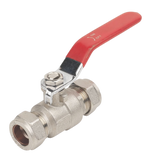
MaxHeatUFH does not stock magnetic filters, so buy one from your boiler or heat pump supplier and fit it with proper isolation. We stock the valves and the pumps and manifold components around it, including full bore lever ball valves for isolation.
What else does BS 7593 water treatment involve?
The filter is one line of a five-line regime. For a system with underfloor heating, BS 7593:2019 means:
| Step | When |
|---|---|
| Clean and flush the system | At commissioning and before any new appliance |
| Dose with inhibitor | At commissioning, and after any work that dilutes it |
| Check water and inhibitor level | Every year |
| Re-dose inhibitor or full lab test | Every five years |
| Service the filter | Every year, and at recommissioning |
Two additions matter for UFH specifically. Systems running below 60°C, which is every UFH and heat pump system, should consider a biocide to stop bacterial growth in the warm, sealed circuit. And where the system could freeze, a park home feed or a garden room run, use an inhibited antifreeze rather than plain inhibitor. Our guide to inhibitor, biocide and antifreeze for UFH covers products and dosing, and filling and purging a UFH system shows how the chemicals go in. In hard water areas, above 200ppm, Benchmark also calls for limescale measures on the hot water side.
Design your UFH system yourself in 3 minutes with MaxHeatUFH ProLoop and get an instant quick design and quote. Start your design
Frequently asked questions
Do I need a magnetic filter with a heat pump?
Yes, arguably more than with a boiler. Benchmark guidance highlights heat pumps' narrow waterways and higher flow rates, which dislodge debris and block strainers and heat exchangers; it notes poor water quality quickly reduces heat pump efficiency.
Can I fit a magnetic filter to an existing underfloor heating system?
Yes. It cuts into the return pipework near the appliance between two isolating valves. Clean and flush the system first, because the standard treats the filter as protection for a clean system, not a cure for a dirty one.
Does a magnetic filter remove all sludge?
No. It captures magnetic iron oxides, which are the bulk of heating sludge, but limescale and non-ferrous debris pass it. That is why the standard pairs it with cleaning, inhibitor and annual water checks.
How often should the filter be cleaned?
At every annual service, and whenever the system is recommissioned. A filter that fills fast between services is evidence of active corrosion worth investigating.
Will a filter fix a cold underfloor heating loop?
Not by itself. A silted loop needs flushing through the manifold first; the filter then stops the problem returning. Start with our guide to underfloor heating not getting warm to confirm sludge is actually the cause.
Does underfloor heating pipe itself corrode?
No, the plastic pipe does not rust, and its EVOH or aluminium barrier keeps oxygen from diffusing in. The magnetite comes from steel and iron elsewhere in the circuit, which is why barrier pipe plus inhibitor protects the whole system.
Sources: Benchmark guidance on maintaining heating and hot water systems, PHPI summary of BS 7593:2019, BEAMA Part L 2021 heating guidance (commissioning to BS 7593)
Products in this guide
Watch how each part works and how to fit it, and download its data sheet and install manual.


Every data sheet and manual: Product Library · All videos: MaxHeatUFH on YouTube

Design it in MaxHeatUFH ProLoop
Add your rooms, choose screed, overlay, joisted or electric, and get a free quick design and full kit list with prices.