

Underfloor heating in Scotland: building standards, heat in buildings and running it well
How underfloor heating fits Scotland's own rules: Section 6 of the Building Standards Technical Handbooks, the New Build Heat Standard from April 2024, Home Energy Scotland grants, running costs and the floor build-ups that suit Scottish homes.
Short answer: Underfloor heating is allowed everywhere in Scotland, but the rules are Scotland's own: energy standards come from Section 6 (Energy) of the Scottish Building Standards Technical Handbooks, not England's Part L. In any new building with a building warrant applied for from 1 April 2024, the New Build Heat Standard (standard 6.11) bans direct emission heating such as gas, oil and LPG boilers, so new-build underfloor heating runs from a heat pump, a heat network or electric heating. MaxHeatUFH delivers across Scotland next working day on orders placed by 12pm Monday to Friday.
Scotland runs its own building standards system. Instead of building regulations approval and Approved Documents, work needs a building warrant from the local authority verifier, and the guidance sits in the Technical Handbooks published by the Scottish Government. Energy, insulation and heating are covered by Section 6 (Energy) of the domestic handbook. English guides that quote Part L figures do not apply north of the border, and the two systems have drifted apart: Scotland moved first on banning fossil fuel boilers in new buildings.
None of that makes underfloor heating harder to fit in Scotland. If anything it makes it the obvious choice, because the heating systems Scotland is steering everyone towards all work best with a large, low-temperature emitter, and the floor is the largest emitter in the house. This guide covers the standards, the New Build Heat Standard, grants, running costs and the floor build-ups that suit Scottish homes. For the English rules, see our guide to underfloor heating, Part L and the Future Homes Standard.
Which building standards cover underfloor heating in Scotland?
Section 6 (Energy) of the Building Standards Technical Handbook: Domestic sets the energy standards for Scottish homes, covering carbon and energy targets, insulation of the building envelope, and the efficiency and control of heating systems. Depending on the job, other sections apply too, such as structure and fire, but Section 6 is where heating lives.
The practical points for an underfloor heating project are:
- New builds and conversions need a building warrant, and the heating system is assessed as part of it. Your architect or verifier works to the Technical Handbooks, so give them the system design, not an English Part L specification.
- Like-for-like replacement of a heating appliance in an existing home generally sits outside warrant requirements, but the work must still be carried out by the right trade: a Gas Safe engineer for gas boiler work and a qualified electrician for electric heating connections.
- Insulation first. Section 6 sets tighter fabric standards than older Scottish homes were built to, and underfloor heating performs best in a well-insulated floor. Fitting floor insulation while the floor is up is almost always worth it.
Do not mix the two rulebooks. England's Part L U-values, SAP versions and flow temperature guidance are written for England; in Scotland the equivalent requirements come from Section 6 and are checked by your verifier against the Scottish handbooks.
What is the New Build Heat Standard and does it affect underfloor heating?
The New Build Heat Standard came into force on 1 April 2024 through the Building (Scotland) Amendment Regulations 2023, which added standard 6.11 to the building standards. It requires new buildings to be designed and constructed so that space heating, cooling and hot water are not provided by a direct emission heating system, meaning a combustion appliance that produces more than a negligible level of greenhouse gas emissions at the point of use.
| Heating system | Allowed in a new build? |
|---|---|
| Gas, oil or LPG boiler | No |
| Air or ground source heat pump | Yes |
| Heat network connection | Yes |
| Direct electric heating | Yes |
| Solar thermal | Yes |
The standard applies to new buildings, and to some conversions where reasonably practicable, with a building warrant applied for from 1 April 2024. It does not apply to alterations or extensions of a pre-2024 building, to emergency heating used only when the normal system fails, or to heating provided solely for frost protection. So you can still repair or replace the gas boiler feeding underfloor heating in an existing Scottish home.
For underfloor heating this standard is good news. Wet underfloor heating is the emitter that suits a heat pump best, because the whole floor gives out heat at a low water temperature. If you are building new in Scotland, designing the floor for underfloor heating from day one is the simplest route to a compliant, efficient system.
Why does underfloor heating suit a heat pump in Scotland?
Because a heat pump works most efficiently when the water it sends out is cool, and underfloor heating is designed to run on cool water. A radiator system often needs hot water to heat a room; a floor with pipe laid across its whole area can heat the same room with water not far above room temperature. The lower the flow temperature, the less electricity the heat pump uses for the same heat.
Scotland's climate makes the design margin matter more. Heating systems are sized for a cold design day, and in much of Scotland that design day is colder than in southern England, so rooms need more output per square metre. With underfloor heating you get that output by laying pipe at closer centres and insulating well, rather than by turning the water temperature up. Our guides to underfloor heating with a heat pump and what size heat pump you need cover the design in detail.
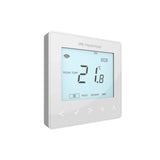
A typical Scottish heat pump system uses PERT-EVOH oxygen barrier pipe into a stainless steel manifold, often without a mixing valve because the heat pump itself supplies water at the right temperature. Room thermostats and actuators zone the house so bedrooms can sit cooler than living rooms.
What grants can you get for a heat pump in Scotland?
Scotland has its own scheme. The Boiler Upgrade Scheme is only open to people in England and Wales; in Scotland, support comes through the Home Energy Scotland Grant and Loan, funded by the Scottish Government as part of its heat in buildings programme.
| Support | Amount |
|---|---|
| Heat pump grant | Up to £7500 |
| Optional interest-free loan on top | Up to £7500 |
| Rural uplift to the grant | Extra £1500 |
The rural uplift applies in remote rural, island and off-gas accessible rural areas, and there are separate grants and loans for insulation and other energy efficiency work. The main conditions: the property must be an existing home in Scotland, you must own it and live in it as your main residence, the heat pump must provide 100% of the heating and hot water, and funding is first come, first served. A replacement for an existing heat pump qualifies for a loan but not the grant. Check the current terms with Home Energy Scotland before you commit.
On VAT, be careful with what the 0% rate actually covers. Until 31 March 2027, the zero rate on energy-saving materials applies only where a qualifying installer supplies and installs qualifying measures, such as a heat pump with its heating system; from 1 April 2027 it is due to revert to the reduced 5% rate. Buying kit supply-only from any merchant, including MaxHeatUFH, is a standard-rated sale, so our prices include 20% VAT. Our guide to underfloor heating grants and VAT explains the routes.
What does underfloor heating cost to run in Scotland?
It depends on the heat source, the insulation and the tariff, not on the underfloor heating itself. Under the October 2026 price cap, electricity averages 26.32p/kWh and gas 7.97p/kWh for a direct debit customer in Great Britain, and Scottish households are within that cap.
On a gas boiler, underfloor heating typically costs no more to run than radiators on the same boiler, and the lower water temperature lets a condensing boiler condense more of the time. On a heat pump, the gap between the electricity and gas price is closed by efficiency: a heat pump delivers more units of heat than the units of electricity it consumes, and it does so best at the low flow temperatures underfloor heating runs at. That is why pairing the two is the standard new-build approach in Scotland.
Whatever the heat source, zoning and sensible set temperatures matter more than the emitter. Heat the rooms you use, run setbacks rather than switching fully off in a cold spell, and insulate the floor below the pipe so the heat goes up, not down.
Which floor build-ups suit Scottish homes?
All the usual systems work in Scotland; pick by the floor you have.
- New concrete or screeded floors: pipe clipped or stapled over floor insulation, then screeded. The standard new-build route, and the cheapest per square metre.
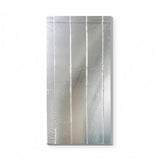
- Suspended timber floors: common in Scottish stone and timber-frame homes. Pipe runs between the joists in aluminium spreader plates, with insulation beneath; see the joisted floor systems range.
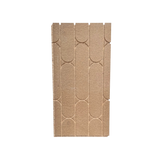
- Over an existing floor: low-profile routed boards such as MaxHeatChip grooved chipboard add underfloor heating in a renovation without digging up the slab.
In an older, draughtier property, treat insulation and draughtproofing as part of the heating job. The browse point for complete systems is the water underfloor heating range.
Does MaxHeatUFH deliver to Scotland?
Yes. Orders placed by 12pm Monday to Friday are delivered next working day across the UK, including Scotland. There are 30-day returns, and trade accounts with trade prices for installers. MaxHeatUFH is a supplier and does not install; if you want the install handled, we pass projects to vetted approved installers through our installation enquiry page, or we can supply only and support your own installer or plumber.
Design your UFH system yourself in 3 minutes with MaxHeatUFH ProLoop and get an instant quick design and quote. Start your design
Frequently asked questions
Can I still install a gas boiler with underfloor heating in Scotland?
In an existing home, yes. The New Build Heat Standard applies to new buildings, and some conversions, with a building warrant applied for from 1 April 2024. Alterations and extensions of a pre-2024 building are excluded, so repairing or replacing an existing boiler is still allowed.
Does England's Part L apply in Scotland?
No. Scotland has its own building standards system, with energy requirements in Section 6 (Energy) of the Scottish Building Standards Technical Handbooks and compliance checked through the building warrant process. Quote Scottish standards to your verifier, not English Approved Documents.
How much is the Home Energy Scotland heat pump grant?
Up to £7500 as a grant, with an optional interest-free loan of up to £7500 on top, and an extra £1500 grant uplift for remote rural, island and off-gas accessible rural homes. It applies to existing owner-occupied homes where the heat pump provides all the heating and hot water.
Is the Boiler Upgrade Scheme available in Scotland?
No. The Boiler Upgrade Scheme is open to people in England and Wales. Scottish homeowners use the Home Energy Scotland Grant and Loan instead.
Do I pay VAT on underfloor heating kit in Scotland?
Buying supply-only from a merchant, including MaxHeatUFH, includes 20% VAT. The 0% VAT rate on energy-saving materials applies only where a qualifying installer supplies and installs qualifying measures, and it is due to revert to 5% from 1 April 2027.
Which heating systems comply with the New Build Heat Standard?
Zero direct emissions systems: heat pumps, heat networks, direct electric heating and solar thermal. Gas, oil and LPG boilers do not comply in buildings covered by the standard.
How quickly can MaxHeatUFH deliver to Scotland?
Next working day on orders placed by 12pm Monday to Friday, anywhere in the UK including Scotland.
Sources: The Building (Scotland) Amendment Regulations 2023 (standard 6.11), Scottish Building Standards Technical Handbook: Domestic, Section 6 Energy, Home Energy Scotland: grants and loans, GOV.UK: Boiler Upgrade Scheme, VAT (Installation of Energy-Saving Materials) Order 2024 explanatory memorandum, Ofgem: energy price cap October to December 2026
Products in this guide
Watch how each part works and how to fit it, and download its data sheet and install manual.




Every data sheet and manual: Product Library · All videos: MaxHeatUFH on YouTube

Design it in MaxHeatUFH ProLoop
Add your rooms, choose screed, overlay, joisted or electric, and get a free quick design and full kit list with prices.