








Underfloor heating with a log burner or stove in the room
How underfloor heating and a wood burning stove share a room: zoning and thermostat placement so the UFH backs off cleanly, the Part J rules your HETAS installer works to, and why a stove should not feed the UFH water without specialist design.
Short answer: A log burner and underfloor heating work well in the same room if the controls expect each other. Zone the room on its own thermostat, sited out of the stove's direct radiant heat, so the UFH backs off while the stove runs and carries the room the rest of the time. The stove itself sits under Building Regulations Part J, covering combustion air, the hearth and a carbon monoxide alarm, and should be installed by a HETAS-registered installer. Do not connect a stove to the UFH water side without specialist design.
Plenty of living rooms end up with both: underfloor heating doing the everyday work and a log burner for the evenings you want flames. The combination is comfortable and practical, but it throws up three real questions. Will the stove confuse the UFH controls? Who is allowed to install and sign off the stove? And can the stove heat the UFH water itself?
This guide answers the UFH side properly and keeps the stove side to what the regulations say. Stove installation is HETAS territory: chimneys, flues, hearths and combustion air are specialist work with their own sign-off, and nothing here replaces your installer's judgement on them.
Will a log burner make the underfloor heating switch off?
Yes, in that room, and that is the system working correctly. A stove putting several kilowatts into a living room will lift the room past its setpoint, the room thermostat will close its actuator, and the UFH loop stops heating. Rooms on other zones carry on unaffected, which is exactly why zoning matters in a stove house.
Two things make the handover smooth rather than lumpy:
- Thermostat position. If the thermostat can see the stove, radiant heat makes it read high and the UFH shuts down long before the rest of the room is warm. Site it on a wall out of the stove's line of sight and away from the chimney breast; our guide to thermostat placement covers the rules. A wireless thermostat such as the Heatmiser neoAir is useful here because you can move it until the reading behaves.
- Thermal mass. A screeded UFH floor responds slowly, so it will still be releasing heat for a while after the stove is lit, and slow to return after the stove dies down overnight. That is normal; see thermal mass and UFH for how to schedule around it.
How should the room be zoned and controlled?
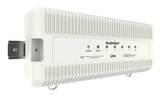
Give the stove room its own zone and let every other room run on its own thermostat. On the manifold that means the stove room's loops on their own ports with their own actuators, wired through a wiring centre such as the Heatmiser UH4, so one hot living room cannot shut heat off anywhere else.
- One thermostat per room, with the stove room's thermostat out of radiant sight of the fire.
- Use setback, not off, in the stove room. A couple of degrees of setback while the stove runs means the floor is not stone cold at breakfast; setback schedules shows the settings.
- Open-plan rooms: a stove in a big open space may warm one end only. Splitting a large space into two UFH zones lets the far end keep heating while the stove end rests; useful in rooms with lots of glazing, as covered in open-plan rooms and glazing.
- Size the UFH for the whole heat loss anyway. Treat the stove as an occasional bonus, not part of the heating design. The UFH must hold the room on a cold day when nobody lights the fire.
What do the Building Regulations require for the stove?
Approved Document J covers solid fuel appliances in England, and your HETAS installer works to it. The headlines for a typical freestanding wood burner:
| Item | Requirement under Part J guidance |
|---|---|
| Combustion air | Stoves over 5kW rated output need permanently open ventilation, sized at 550mm² per kW above 5kW; newer airtight homes generally need a vent whatever the output, and some stoves can duct air directly from outside |
| Hearth | A superimposed hearth at least 12mm thick is acceptable where the appliance does not heat the hearth above 100°C; otherwise a constructional hearth at least 125mm thick; freestanding stoves need a hearth area of at least 840 x 840mm |
| Carbon monoxide alarm | Required in the same room as the appliance, typically fixed high and 1 to 3m horizontally from it |
| Sign-off | A HETAS-registered installer can self-certify and notify the council; otherwise you must notify Building Control before work starts |
That table is context, not an installation manual: use a HETAS installer and let them handle the stove side end to end. One UFH-specific note: if the stove needs an air vent, position it so the incoming cold air does not wash across the thermostat.
Can a log burner heat the underfloor heating water?
Not without specialist design, and for most households not at all. Most modern room stoves are dry stoves with no water connection. Stoves with back boilers exist, but linking an uncontrolled solid fuel heat source into a heating circuit raises safety requirements around overheat protection and heat dumping that are entirely different from a gas or oil boiler, and the design belongs with a heating engineer and a HETAS installer working together.
MaxHeatUFH systems are designed to run from controllable heat sources: boilers and heat pumps, via a blending valve set such as the 20 to 55°C blending valve pump pack. If you want wood as a genuine heat source rather than an occasional fire, raise it with a heating engineer at design stage; see also UFH flow temperatures by heat source for what the floor actually needs.
Does the hearth area get underfloor heating?
No. Leave the hearth and the area under the stove out of the heated floor. A constructional hearth is a thick solid base, no place for pipe, and there is no point heating a slab the stove will heat anyway. Run the loops up to the hearth edge and stop, the same way you would treat a kitchen island. Keep a drawing of where the pipes run near the hearth: if a fireplace is ever rebuilt or a hearth extended, the fixings must not find a pipe. Our guide to finding UFH pipes shows how to locate them later.
Timber floors deserve one more note: a stove on an upper timber floor or in a room with joisted UFH involves hearth construction above the heated zone, so make sure the stove installer and the UFH installer see each other's drawings before anyone cuts.
Free design tool: map your rooms in MaxHeatUFH ProLoop, keep the hearth out of the heated area, and get a quick zoned design with a fully priced kit. Start your design
Frequently asked questions
Can you have underfloor heating and a log burner in the same room?
Yes. Zone the room on its own thermostat, placed out of the stove's direct radiant heat, and the UFH simply backs off while the fire is lit and takes over when it dies down.
Why does my underfloor heating turn off when the stove is lit?
The room thermostat has reached its setpoint, so its loop closes. That is correct behaviour. If it happens the moment the fire is lit while the room still feels cool, the thermostat is reading the stove's radiant heat and should be relocated.
Do I need a vent in the room for a wood burner with UFH?
Part J guidance requires permanently open ventilation for stoves over 5kW, sized at 550mm² per kW above 5kW, and airtight newer homes generally need one regardless. Your HETAS installer will size it; just keep the vent's cold draught away from the thermostat.
Can a wood burning stove run the underfloor heating?
Only a back boiler stove within a specialist-designed system. It is not a DIY connection to a UFH manifold; involve a heating engineer and a HETAS installer if you want solid fuel as a real heat source.
Does underfloor heating go under the hearth?
No. Stop the loops at the hearth edge and leave the hearth construction to the stove installer.
Do I need a carbon monoxide alarm with a log burner?
Yes. Part J requires a CO alarm in the same room as a solid fuel appliance, typically mounted high and 1 to 3m from the stove. Your installer will position it.
Should I size the UFH smaller because the stove adds heat?
No. Design the UFH to cover the room's full heat loss on a cold day without the stove, and treat the fire as a bonus.
Sources: Approved Document J: combustion appliances (gov.uk)
Products in this guide
Watch how each part works and how to fit it, and download its data sheet and install manual.




Every data sheet and manual: Product Library · All videos: MaxHeatUFH on YouTube

Design it in MaxHeatUFH ProLoop
Add your rooms, choose screed, overlay, joisted or electric, and get a free quick design and full kit list with prices.


