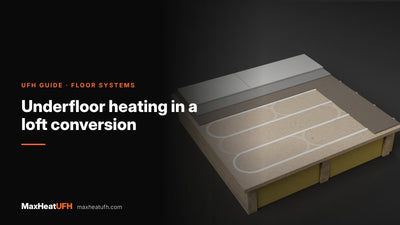
Screed bays and expansion joints over underfloor heating
When a heated screed needs expansion joints, the bay size limits for sand and cement and liquid calcium sulphate screeds, where joints go, how to sleeve UFH pipe across them, joint types and edge strip thickness.
Short answer: A heated sand and cement screed under tile or stone needs expansion joints. The guidance under BS EN 1264-4 is a joint for every 40m² of floor, a bay no longer than 8m and a shape no longer than 2:1. Calcium sulphate (liquid) screeds allow much bigger heated bays, up to 300m² and 20m long at 6:1 in one maker's data. Put joints at doorways and between heating zones, and sleeve any pipe that crosses a joint.
Screed moves. It shrinks as it dries and expands and contracts each time the underfloor heating warms and cools it. If the floor is one large slab with nowhere to move, it relieves the stress by cracking, and tiles or stone on top crack with it. Expansion joints divide the floor into bays that can move on their own.
This guide explains when you need joints, the bay size rules for sand and cement and liquid screeds, where joints go, how to protect pipes that cross them, and how to plan loops so they fit the bays. For screed depths and drying times, see our screed depth and drying guide.
Do heated screeds need expansion joints?
Yes, in most cases. One manufacturer's installation guide, citing BS EN 1264-4, says expansion joints are needed in stone and ceramic finished screeds. Underfloor heating adds movement on top of normal drying shrinkage, because the screed warms and cools every day. Joints are needed:
- Where a bay would be bigger than the limits below.
- In long narrow areas such as corridors.
- At door thresholds.
- Between separately controlled heating circuits or zones.
- Where heated and unheated screed meet.
- Over any structural movement joint in the slab below.
The first two come from one manufacturer's BS EN 1264-4 guidance. Liquid screed maker A's data lists door thresholds, separate heating zones, heated meeting unheated screed and structural joints. Liquid screed maker B adds areas of high thermal gain.
What is the maximum bay size for a heated screed?
It depends on the screed type. Sand and cement screeds need much smaller bays than calcium sulphate screeds.
| Screed | Max bay area | Max bay length | Max aspect ratio |
|---|---|---|---|
| Sand and cement, heated, tile or stone finish (BS EN 1264-4 guidance) | 40m² | 8m | 2:1 |
| Calcium sulphate (maker A), heated | 300m² | 20m | 6:1 |
| Calcium sulphate (maker B), heated | 300m² | See maker | 6:1 |
| Calcium sulphate (maker A), unheated | 1,000m² | 40m | 8:1 |
The aspect ratio is the length of the bay divided by its width. A 4m by 8m bay is 2:1. A corridor 1.2m wide and 6m long is 5:1, which is why corridors need a joint in a sand and cement screed even when they are small.
These figures are maker and guidance limits. Always follow the screed supplier's own data for your product and the floor finish maker's rules, and use the smaller limit where they differ.
Where should expansion joints go?
Put joints where the floor naturally divides, and plan them before the pipe goes down.
- Doorways. Run a joint across the threshold so each room's screed moves on its own.
- Large rooms. Split any area over the bay limits into bays that are as close to square as you can make them.
- Corridors. Add joints along long narrow runs to keep the aspect ratio in limit.
- Zone boundaries. Put joints between areas heated by different thermostats, as they may be at different temperatures.
- Structural joints. Carry any movement joint in the slab up through the screed.
Mark the joint positions on the floor plan and on the insulation before laying pipe. Then design the loops around them.
How do you run UFH pipe across an expansion joint?
Keep crossings to a minimum and sleeve the pipe where it crosses. One manufacturer's overlay board installation guide says only flow and return pipes should cross expansion joints, covered with a flexible tube about 0.3m long that spans the joint. One manufacturer specifies a 400mm length of conduit where the pipe passes through an expansion or day joint, and conduit through internal walls and doorways.
- Design each loop to sit within one bay where you can.
- Let only the flow and return of a loop cross into the next bay, side by side, not the loop itself zigzagging across.
- Centre the sleeve on the joint so it covers the pipe on both sides.
- Do the same where feed pipes cross doorways on their way to other rooms.
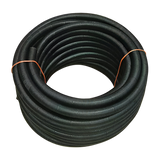
MaxHeatUFH pipe conduit for 16mm pipe comes in 25m coils. One manufacturer also says the pipe must stay under pressure, at 6 bar in its guide, while the screed is laid. See our pressure testing guide.
What types of expansion joint can be used?
There are two main types: preformed joints laid before the screed, and joints cut into the screed after it is laid.
| Joint type | How it is made | Over UFH pipes |
|---|---|---|
| Preformed expansion joint | Closed-cell foam strip, 8 or 10mm, on a self-adhesive T base, fixed before the pour and trimmed to level after | Preferred |
| Saw-cut contraction joint | Cut into the screed after it is laid, then sealed | Avoid, or cut shallow with care |
Maker A says saw-cut joints should be avoided over underfloor heating and preformed joints used instead, because they avoid cutting near the pipes. Where an induced joint is cut in a heated screed, that overlay board guide says it may be no deeper than one third of the screed thickness, allowing for where the pipes are, and should be sealed after the first heat-up.
What edge strip does a heated screed need?
Every heated screed needs a compressible strip around the edge of the room, as well as joints in the field. The strip lets the whole bay expand against the walls. Liquid screed makers set a minimum thickness:
- Maker A: at least 8mm closed-cell polyethylene, and 10mm with underfloor heating.
- Maker B: 8mm for heated screed, typically 10mm, and 5mm for unheated screed.
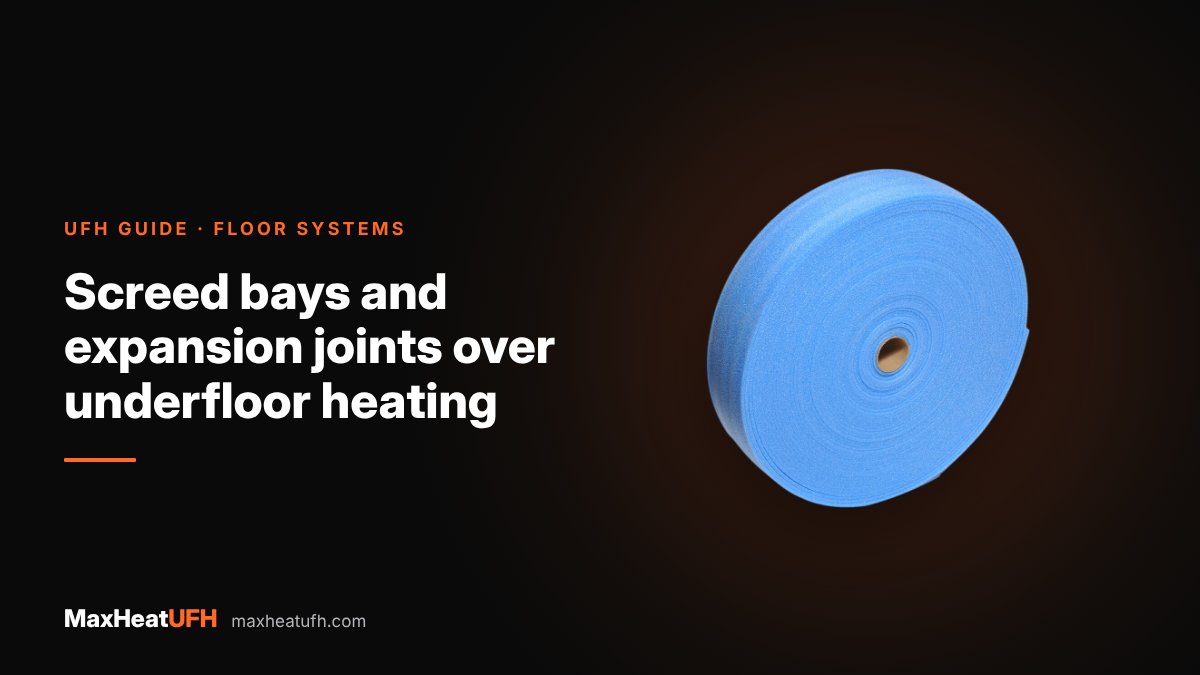
Fit the strip all the way round, including around columns, steps and door frames, and lay the insulation hard up against it. MaxHeatUFH edge insulation roll is 100mm by 5mm. Where your screed maker asks for a thicker strip, follow its requirement.
How does screed type change the joint plan?
Liquid calcium sulphate screeds allow far larger bays. But they still need joints at doorways and between heating zones, and maker A still asks for 10mm edge strip with UFH. Maker A also gives a minimum 25mm cover over the pipe, nominally 30mm. One manufacturer gives 65mm as the minimum thickness for a domestic sand and cement screed under BS 8204-1.
The floor system matters too. Castellated panels are popular under liquid screed because they hold the pipe in place. One manufacturer warns that panel joints must be made properly, not simply butted up, under pumped screed. Our guides to castellated panels with liquid screed and clip rail and tacker systems cover laying the pipe.
When can I put tiles over a jointed heated screed?
Only when the screed is dry and has been through its first heat-up. One manufacturer says not to use the heating to dry or cure the screed. Once it has fully cured, the flow temperature should be raised slowly to the design temperature. One overlay board guide gives a first heat-up of 20 to 25°C supply temperature held for at least 3 days, then the design maximum for a further 4 days. Maker A's commissioning cycle for its screed takes about 21 days in total and is required before covering.
Agree with your tiler, before tiling, how each screed joint will be treated in the tile or stone layer, following the tile adhesive maker's guidance. Our guide to tiling over underfloor heating covers adhesives and finishes.
Design your UFH system yourself in 3 minutes with MaxHeatUFH ProLoop and get an instant quick design and quote. Start your design
Frequently asked questions
How big can a heated screed bay be?
For a sand and cement screed under tile or stone, about 40m², no longer than 8m and no more than 2:1. Calcium sulphate screeds allow up to 300m² in one maker's data. Follow your screed supplier's figures.
Do I need an expansion joint at every doorway?
It is good practice and liquid screed makers list door thresholds as a joint position. It lets each room's screed move on its own.
Can UFH pipes cross an expansion joint?
Yes, but only the flow and return, and sleeved where they cross. One manufacturer specifies a 400mm length of conduit at expansion and day joints.
Can I saw-cut joints in a heated screed?
It is best avoided because of the pipes. Use preformed joints instead. If an induced joint is cut, keep it to no more than one third of the screed depth.
Does liquid screed need expansion joints?
Yes, though far fewer. Heated bays can be up to 300m² in one maker's data, but joints are still needed at doorways, between zones and where heated meets unheated screed.
How thick should the edge strip be?
Liquid screed makers ask for at least 8mm with UFH, and one asks for 10mm. Check your screed supplier's requirement.
What is a day joint?
A day joint is where one day's screed pour stops and the next starts. Treat it like an expansion joint for pipe protection: one manufacturer specifies 400mm of conduit where pipe crosses one.
Products in this guide
Watch how each part works and how to fit it, and download its data sheet and install manual.


Every data sheet and manual: Product Library · All videos: MaxHeatUFH on YouTube
Design it in MaxHeatUFH ProLoop
Add your rooms, choose screed, overlay, joisted or electric, and get a free quick design and full kit list with prices.