



Electric underfloor heating in a conservatory
Why electric underfloor heating suits conservatories: the building regulations exemption, choosing a 200W/m² mat, insulation boards, running costs under the October 2026 price cap, and the wiring an electrician must do.
Short answer: Electric underfloor heating works well in a conservatory with a tiled or stone floor, and it can help keep the room exempt from building regulations because it is an independent heating system with its own thermostat. Use a 200W/m² mat on insulation boards: a conservatory is mostly glass, so it loses heat far faster than the rest of the house and needs the highest floor output you can get. A qualified electrician must make the final connection under Part P of the Building Regulations and BS 7671.
A conservatory is the hardest room in the house to keep warm. The walls and roof are largely glazing, and even new glazing is allowed to lose far more heat per square metre than an insulated wall. Radiators eat into the little solid wall there is, and extending the house's wet heating system into the conservatory can affect its exempt status under the Building Regulations.
Electric underfloor heating avoids both problems. The mat sits under the tiles, takes up no wall space, and runs from its own thermostat as a separate, independently controlled system. This guide covers the rules, the right mat and insulation, what it costs to run, and the wiring. If you are heating a solid-built extension rather than a glazed conservatory, see our guide to underfloor heating in an extension or conservatory.
Can you put electric underfloor heating in a conservatory?
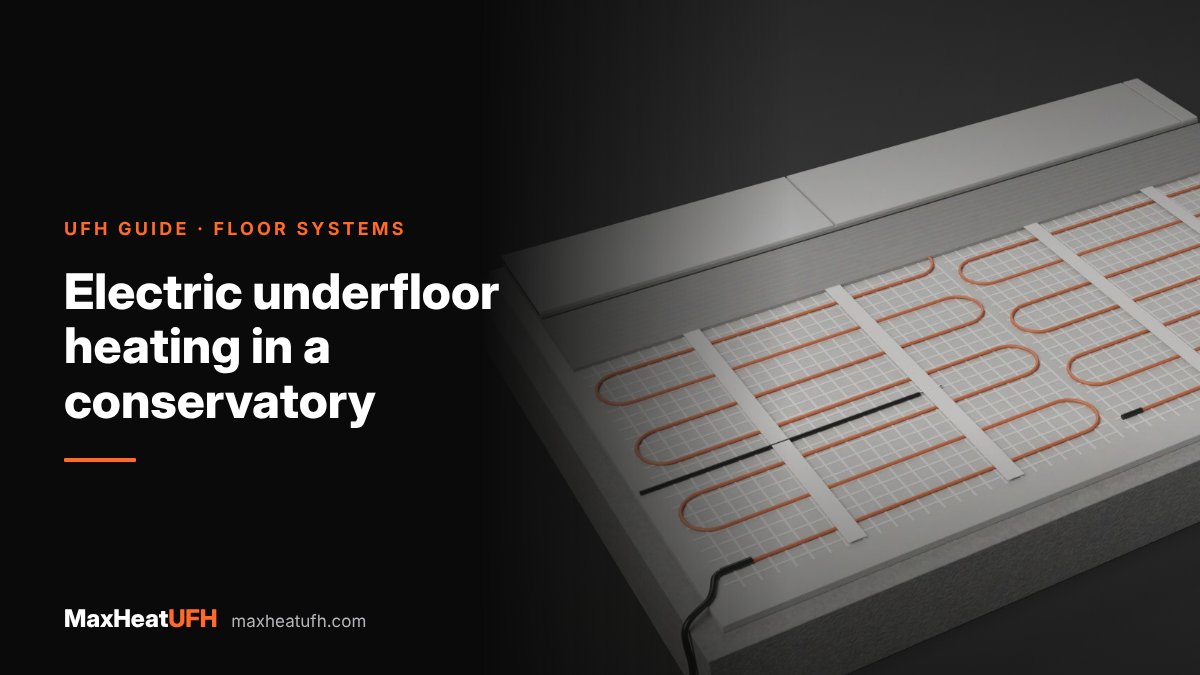
Yes, and it is one of the most popular rooms for it. Conservatory floors are usually tiled, and MaxHeatUFH electric mats are made for tile and stone floors, so the build-up is simple: insulation board on the slab, mat, flexible tile adhesive, tiles.
The mat is thin, so it adds only a few millimetres plus the insulation board to the floor height. There is no pipework back to the boiler, no manifold and no screed. For a typical conservatory the materials go in over a weekend, with the electrician booked for the final connection and testing.
Measure the free floor area first. The mat should only cover floor you can walk on, so take off any area under planters, sofas that never move or fixed furniture. In most conservatories the heated area is 60 to 80% of the floor.
Does underfloor heating affect conservatory building regulations?
Done the right way, it helps. The Planning Portal lists the conditions for a conservatory to be exempt from building regulations: it must be single storey and at ground level, under 30m² in floor area, separated from the house by external quality walls, doors or windows, and, importantly, "there should be an independent heating system with separate temperature and on/off controls".
An electric underfloor heating mat with its own thermostat is exactly that: an independent system you can switch on, off and set separately from the house heating. Extending the house's boiler-fed radiators or wet underfloor heating into the conservatory, on shared controls, is the arrangement that conflicts with the exemption.
Two more points from the same guidance. Any fixed electrical work must still comply with the electrical safety rules in the Building Regulations, which is why the final connection is electrician's work. And if you create a new structural opening between the house and the conservatory, that opening needs building regulations approval even when the conservatory itself is exempt.
Why do conservatories need more floor output than other rooms?
Because glass loses heat much faster than insulated fabric. Under Part L, replacement windows in an existing home only have to achieve a U-value of 1.4W/m²K, and the limiting standard for windows in a new build is 1.6W/m²K. An insulated cavity wall is several times better. A conservatory is walls and often a roof of glazing, so its heat loss per square metre of floor is far higher than any normal room.
The floor is also the only heated surface, and its temperature is limited for comfort and safety. BS 7671 requires the surface temperature of electric floor heating to be limited where people are in contact with it, with 35°C given as the example figure. So you cannot simply run the floor hotter to chase the heat loss; you need the most output the floor can give within that limit, which means the highest wattage mat, tight coverage of the free floor area and insulation below.
Be realistic in the depths of winter. In a poorly sealed, fully glazed room on a freezing day, even a floor at full output may need help from the sun or a secondary heater. In a modern conservatory with decent glazing and a well-insulated floor, electric underfloor heating is normally enough for the way most people use the room.
Which electric mat should you choose for a conservatory?
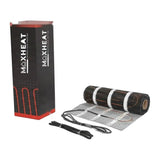
Choose the 200W/m² mat. The extra output over a standard mat costs little more and gives the room reserve power and a faster warm-up, which matters in a space that cools quickly.
| Room | Mat | Why |
|---|---|---|
| Glazed conservatory | 200W/m² | Highest heat loss, fastest response needed |
| Garden room or solid-roof conservatory with insulation | 150W/m² | Lower heat loss, standard output is enough |
| Conservatory used as the main living space all winter | 200W/m², full free-area coverage | Needs the most output the floor can give |
A higher wattage mat does not have to cost more to run. The thermostat holds the room at the temperature you set either way; a 200W/m² mat simply gets there faster and copes on colder days. Our guide to electric underfloor heating running costs explains the duty cycle.
Do you need insulation boards under the mat?
Yes, more than in any other room. A conservatory floor is usually a concrete slab, often with little or no insulation in it, and an uninsulated slab soaks up the mat's heat for hours before the tiles warm.
Fitting insulation boards changes the response completely. Published tiling guidance puts the heat-up time of an electric system on insulated boards over concrete at roughly 30 minutes to an hour, against two to eight hours heating the bare slab. Boards such as our cement-coated XPS tile backer board bond to the primed slab with flexible tile adhesive, and the cement face takes the mat and tile adhesive directly. See our guide to insulation boards for electric underfloor heating for thickness and fixing.
Thicker boards insulate better, but check your door threshold heights first. Even a thin board is a big improvement over tiling the mat straight onto cold concrete.
How much does it cost to run in a conservatory?
Work from the heated area, the mat wattage and your electricity rate. Under the October 2026 price cap, electricity averages 26.32p/kWh for a direct debit customer in Great Britain.
Take a 12m² conservatory with 8m² of heated floor under a 200W/m² mat. That is 1.6kW at full power, which costs about 42p per hour when the mat is drawing full load. In practice the thermostat cycles the mat on and off to hold the set temperature, so a typical evening's use costs less than the full-load figure suggests; how much less depends on the weather, the glazing and the insulation under the mat.
The way to keep the cost down is to heat the room when you use it, not all day. Set the programme around your routine, let the floor probe limit the floor temperature, and close the doors to the house so you are not trying to heat the garden. A cooler setback rather than full off can suit rooms used on and off through the day.
How is conservatory underfloor heating wired and controlled?
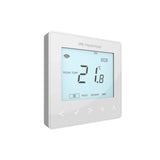
The mat's cold tail runs up the wall in conduit to an electric underfloor heating thermostat such as the Heatmiser neoStat-e, which switches up to 16A and comes with a 3m floor sensor. A floor probe sits in the floor between two cable runs and lets the thermostat control and limit the floor temperature, which protects the adhesive and keeps the surface within the comfort limit.
A qualified electrician must make the final connection. Electric floor heating must be protected by an RCD rated at 30mA or less under BS 7671, the circuit work falls under Part P of the Building Regulations, and installing a new circuit is notifiable work. Your electrician will test the mat, connect it, and certify the job. You can lay the boards and the mat yourself, but leave everything from the wall up to them.
In a conservatory, site the thermostat out of direct sun if it senses air temperature, or run it on the floor sensor. Direct sun on the thermostat will switch the heating off while the floor is still cold.
Free design tool: heating the rest of the house with water underfloor heating too? Design your UFH system yourself in 3 minutes with MaxHeatUFH ProLoop and get an instant quick design and quote. Start your design
Frequently asked questions
Is electric underfloor heating enough to heat a conservatory on its own?
In a modern conservatory with good glazing and insulation boards under the mat, usually yes for normal use. In an older, fully glazed room on the coldest days, the floor's limited surface temperature means it may need help from the sun or a secondary heater.
Does a heated conservatory need building regulations approval?
Not if it meets the exemption conditions: ground level, single storey, under 30m², separated from the house by external quality doors or walls, and heated by an independent system with its own temperature and on/off controls. Electric underfloor heating on its own thermostat meets that heating condition. The fixed wiring itself must still comply with the electrical rules.
Can I run the house central heating into the conservatory instead?
You can, but a conservatory heated by the house system on shared controls no longer meets the exemption conditions, so building regulations would apply to it. An independent electric system avoids that.
What floor coverings work over the mat in a conservatory?
MaxHeatUFH electric mats are for tile and stone floors. Porcelain and ceramic tiles are ideal in a conservatory: they conduct heat well and cope with the sun.
Do I really need insulation boards on the slab?
Yes. On a bare, uninsulated slab the floor can take hours to warm and much of the heat goes downwards. On insulation boards the same mat warms the tiles in roughly 30 minutes to an hour.
Can I install it myself?
You can prepare the floor, fit the boards and lay the mat. A qualified electrician must make the final connection, provide the 30mA RCD protection and certify the work under Part P and BS 7671.
What kit do I need for a conservatory?
The kit is the 200W/m² mat, insulation boards and the neoStat-e thermostat. Browse the electric underfloor heating range for sizes. Orders placed by 12pm Monday to Friday get next working day UK delivery.
Sources: Planning Portal: conservatories and building regulations, British Woodworking Federation: Part L U-value requirements, IET Wiring Matters: floor and ceiling heating systems (BS 7671 Section 753), Ofgem: energy price cap October to December 2026
Products in this guide
Watch how each part works and how to fit it, and download its data sheet and install manual.

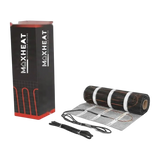


Every data sheet and manual: Product Library · All videos: MaxHeatUFH on YouTube
Design it in MaxHeatUFH ProLoop
Add your rooms, choose screed, overlay, joisted or electric, and get a free quick design and full kit list with prices.
Related guides
 What's in an underfloor heating kit? A complete parts checklistElectric UFH · 6 min read
 Underfloor heating trade accounts: how installers buy UFH supplies at trade pricesElectric UFH · 5 min read
 Buying underfloor heating supplies online: what to check before you orderElectric UFH · 6 min read