



How to drain down underfloor heating (and refill it)
Step-by-step guide to draining underfloor heating at the manifold, the honest limits of emptying buried loops, and how to refill, dose and purge the system afterwards.
Short answer: Drain underfloor heating at the manifold: switch off the heat source and pump, close the manifold's main isolation valves, connect a hose to the drain valve and run it to a gully, then open the loops one at a time so each empties under its own pressure, helped by mains water or air displacement where needed. Gravity alone will not empty loops that sit level with or below the manifold, so plan for water to remain in the pipe unless you deliberately displace it. Refill loop by loop with fresh water, inhibitor and a UFH biocide, then vent and re-pressurise.
You rarely need to drain underfloor heating, which is lucky, because it holds more water than people expect and gives it back reluctantly. But some jobs leave no choice: replacing a manifold or a failed blending valve, repairing a damaged loop, tying a new extension circuit into the system, or changing the system water after a clean.
This guide covers when a drain-down is genuinely needed, the step-by-step method at the manifold, the honest limits of draining pipe buried in a floor, and how to refill, treat and purge the system afterwards so you do not trade one problem for another.
When do you actually need to drain underfloor heating?
Less often than you might think. Good reasons:
- Manifold work. Replacing the manifold, a port valve, a flow meter body or the blending valve set means opening the wet side.
- Pipe repair. A punctured loop has to be isolated and drained before a repair coupling goes in; see our guide to repairing damaged UFH pipe.
- System alterations. Extending the circuit, moving the manifold or re-piping the primaries.
- Water change. After a chemical clean, or when a water test shows the inhibitor is spent and the water badly degraded.
And the poor ones: you do not drain UFH for summer, you simply stop heating it, and the water stays in, treated and sealed; our guide to the summer shutdown explains why. Nor is draining a fix for air or poor circulation, which is a purging job, covered in bleeding air out of UFH.
How do you drain underfloor heating at the manifold?
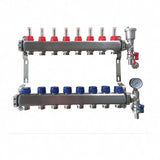
Everything happens at the manifold, because every loop starts and ends there. Allow a couple of hours for a domestic manifold.
- Switch off and cool down. Turn off the heat source and the UFH circulation pump, and let the water cool. Isolate the electrics to the pump and actuators before working around them.
- Isolate the manifold. Close the main flow and return ball valves between the manifold and the rest of the heating system, so you drain the floor circuits, not the boiler or heat pump primary. If the manifold has no isolation valves, fit a manifold ball valve set while you are there; it makes every future job easier.
- Relieve the pressure. Crack the drain valve gently with a hose already attached and run the hose to an outside gully or drain. A sealed system is typically pressurised, so expect the first litre to come out with enthusiasm.
- Open the loops one at a time. Open one loop's isolation valves (or remove its actuator and open the valve) and let it discharge through the drain valve. Opening the manifold's air vent, or the fill valve to air, lets air in to replace the water so the loop empties rather than airlocks.
- Work across the manifold. Close each finished loop before opening the next, and label anything you disconnect. Loops drain fastest when only one is open at a time.
- Displace what gravity leaves. Where a loop must be properly empty, for example for a repair in a cold spell, push the water out deliberately: mains water through the fill valve to shove the old water ahead of it, or low-pressure air through the loop until it runs dry at the drain. Note what this means in reverse: a loop full of air must be refilled and purged just as deliberately.
Can you ever fully empty the loops?
Not by gravity alone. The loops sit in the floor at or below manifold level in most ground-floor systems, so opening the valves lets out the manifold's water and whatever siphons, and leaves the rest lying in the pipe. That matters in two situations:
- Frost. A drained-but-not-empty system in an unheated building can still freeze, and water expanding in a fitting or manifold port does real damage. Either displace the water properly, keep background heat on, or protect the system water with a glycol product; our guide to frost protection compares the options.
- Open pipe ends. If loops are being disconnected from the manifold, expect residual water from every tail you undo, and have towels and a wet vac at the manifold cabinet.
For a planned repair mid-floor, drain the affected loop with displacement, not the whole system: isolate that loop at both ports, push it empty, and leave the other loops full and treated.
How do you refill underfloor heating after draining?
Refill the same way you drained: one loop at a time, so the incoming water pushes air ahead of itself instead of mixing with it.
- Close everything. All loop valves shut, main isolation valves still shut, drain hose still connected and run to the gully.
- Fill and purge loop by loop. Connect mains water to the fill valve, open one loop, and let water flow in through the flow side and out of the drain until it runs clear and bubble-free, then close that loop and move on. This is the standard fill-and-purge method, covered step by step in our guide to filling and purging UFH.
- Dose the treatment. On the final fill, add a corrosion inhibitor and a UFH biocide. One biocide maker's instructions are typical: dose via the manifold at the final fill, 1 litre per 300 litres of system water, circulate for 30 minutes to distribute it, and always dose the inhibitor at the same refill. Systems running below 60°C need the biocide because bacterial and fungal slime causes blockages and corrosion. Details in inhibitor, biocide and antifreeze.
- Re-pressurise and test. Open the main valves, bring the sealed system back to its working pressure, and check the manifold connections you disturbed. If the drain-down was for pipework alterations, pressure test before anything is buried or boxed in; our guide to pressure testing UFH gives the procedure, and a hydraulic test pump does the job properly.
- Run and re-vent. Run the pump with the heat source off, let the air vents work, re-check loop balance against the flow meters, then reintroduce heat gently.
What goes wrong, and how do you avoid it?
- Airlocks. Filling all loops at once through the manifold mixes air into every loop. Fill one loop at a time, always.
- Untreated refill. Fresh mains water with no inhibitor restarts corrosion from day one. Dose at the final fill, not "later".
- Boiler-side surprises. If the manifold cannot be isolated, you are draining the whole heating system, boiler included, and the refill involves the boiler's own filling loop and pressure. Any work on a gas boiler itself is a Gas Safe engineer's job.
- Lost settings. Photograph the flow meter settings before you start; balancing from memory is guesswork.
- Forgotten electrics. Actuators removed for draining must go back on their right ports, or rooms will heat to the wrong thermostats.
Free design tool: if the drain-down is part of a bigger refit, you can design your UFH system yourself in MaxHeatUFH ProLoop and get a quick UFH design, with the circuits laid out from the manifold you place, plus a fully priced kit, in 3 minutes. Start your design
Frequently asked questions
Do I need to drain underfloor heating in summer?
No. The system stays full, treated and pressurised all year; you simply stop calling for heat. Draining for the summer invites air and corrosion for no benefit.
How much water is in an underfloor heating system?
It depends on pipe size and total length, which is why chemical dosing is quoted against system volume. Work it out from your loop lengths and pipe bore, or dose to the maker's per-volume figures, such as 1 litre of biocide per 300 litres.
Can I drain just one loop?
Yes, and for repairs you should. Isolate that loop at its flow and return ports, drain or displace it empty, and leave the rest of the system full.
Will the loops freeze if I drain the system for winter?
They can, because gravity draining leaves water lying in the buried pipe. For an unheated building, displace the water deliberately or protect the system with a glycol antifreeze product instead.
What do I add when refilling underfloor heating?
A corrosion and scale inhibitor plus a biocide for low-temperature systems, dosed at the final fill via the manifold and circulated for 30 minutes. Re-dose every time the system water is changed.
Why is my underfloor heating cold after refilling?
Almost always air. Re-purge loop by loop with the pump off, check the flow meters are reading, and give the floor time: screeded systems take hours to warm through from cold.
Do I need a plumber to drain underfloor heating?
A methodical DIYer can drain and refill at the manifold, but pipework alterations, pressure testing and anything touching a gas boiler belong with professionals; boiler work needs a Gas Safe registered engineer. MaxHeatUFH supplies kit and can point you to a vetted approved installer.
Products in this guide
Watch how each part works and how to fit it, and download its data sheet and install manual.


Every data sheet and manual: Product Library · All videos: MaxHeatUFH on YouTube

Design it in MaxHeatUFH ProLoop
Add your rooms, choose screed, overlay, joisted or electric, and get a free quick design and full kit list with prices.


