

Damaged underfloor heating pipe: how to find and repair it
Yes, a drilled, nailed or cut underfloor heating pipe can usually be repaired. How to isolate the loop, find the damage, choose the right repair fitting and stop it happening again.
Short answer: Yes, a drilled, nailed or cut underfloor heating pipe can usually be repaired. Isolate that loop at the manifold, find the exact spot (often with a thermal camera while the heating runs), open up the floor, cut out the damaged section and join the pipe with a repair coupling made for that pipe, then pressure test before the floor is closed. Some pipe makers say compression repair couplings must stay accessible and never be buried in screed, so check what your pipe maker allows. If a buried joint is not allowed, run a new loop or bring the joint to an access point.
Underfloor heating pipe is tough, and leaks in a properly tested floor are rare. Nearly every damaged loop is the result of something done to the floor later: a screw for a door stop, a masonry drill for a kitchen unit, a nail through a floorboard or a spade during screeding.
This guide covers what to do straight away, how to find the pipe and the damage, how to make the repair, which fittings to use, and how to avoid it next time. If you have lost pressure but do not know where, start with underfloor heating pressure dropping.
What should I do if I have drilled or nailed through a UFH pipe?
Stop the water first, then find out which loop it is. Do not keep running the heating with a known leak.
- Leave the screw or nail where it is for now. It partly plugs the hole and marks the spot.
- Turn the heating off at the wiring centre and heat source.
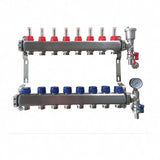
- Isolate the loop. At the manifold, close the flow meter or flow valve and the return valve cap on the loop that runs under that spot. If you do not know which loop it is, close the manifold's ball valves.
- Release the pressure. Drain a little water from the manifold drain so the loop is no longer pushing water out.
- Mop up and protect the floor. Water in screed, timber or under a finish needs to dry before you reinstate.
- Get it repaired. Use a heating engineer or the original installer. If a gas boiler needs work, it must be a Gas Safe registered engineer.
A loop that is isolated at the manifold can stay off while the rest of the house is heated, as long as the system pressure holds.
How do you find underfloor heating pipes in a floor?
Use a thermal imaging camera with the heating running. Warm pipes show as lines through the floor surface, so you can mark them before drilling or before breaking out a repair.
- Heat the floor first. Run the heating so the pipes are warmer than the floor between them. Screed takes longer to show the pattern than a thin overlay or a timber floor.
- Mark the runs. On a DIYnot thread, an installer used a thermal camera to find the pipes, then marked them on masking tape on the floor, with a no-drill zone, so other trades could fix safely.
- Check the drawings and photos. A loop layout and photos taken before the screed went down are the quickest way to find pipes. Keep them with the house documents.
- Look for a wet patch. On a leak, the floor or the finish above it often shows damp. But damp can travel along screed cracks. One DIYnot contributor found a "leak" was moisture rising through a crack in the screed, not the pipe.
Take most care near the manifold and doorways. Contributors on the same DIYnot thread describe pipes damaged where they rise to the manifold, including one cut with a jigsaw and one hit by dropped side cutters on a 90° bend. Pipes are packed closely in these areas, so one fixing can hit more than one loop.
How do I find which loop is leaking?
Pressure test each loop on its own from the manifold. One leading manufacturer's installation guide says it may be necessary to test individual circuits to find damage after a pressure drop.
- Isolate all loops at the manifold.
- Open one loop and pressurise it with a hydraulic test pump.
- Watch the gauge. A loop that loses pressure is the damaged one.
- Repeat for each loop, and note which room each loop serves.
Our guide to pressure testing underfloor heating gives the full method and records.
How do you repair a damaged UFH pipe?
Expose the pipe either side of the damage, cut out the damaged part, and join the ends with a repair coupling. If the hole is longer than a single coupling can bridge, insert a short new piece of the same pipe with a coupling at each end.
- Isolate and depressurise the loop at the manifold.
- Open the floor carefully. Break out screed by hand with a bolster and hammer, working towards the pipe, so you do not damage it further. Expose enough straight pipe either side to fit the coupling.
- Cut out the damage. Use a pipe cutter to cut the pipe square on each side of the hole.
- Prepare the ends. Repair coupling instructions call for pipe ends cut square and reamed. Use a reaming tool or chamfering tool to restore the bore and bevel the inside edge.
- Fit the coupling to the maker's instructions. On a press fitting, push the pipe fully home until it shows in the inspection window, then press. On a compression coupling, fit the inserts fully and tighten the nuts.
- Pressure test. Test the repaired loop with water before covering it. One leading manufacturer's method is 6 bar, top up after 5 minutes, then hold for at least 60 minutes and check the joints.
- Refill and treat. Refill the system, add inhibitor for the water you have replaced, bleed the air and check the flow meter on that loop.
- Reinstate the floor with a screed or repair mortar suited to underfloor heating, and let it dry before laying the finish.
Record where the repair is, with a photo and a measurement from two walls. Anyone who works on that floor later needs to know.
Which fitting should I use to repair UFH pipe?
Use a coupling made for your pipe's type and size, and check where the maker allows it to be fitted. The pipe type is printed along the pipe.
| Option | Good for | Watch out for |
|---|---|---|
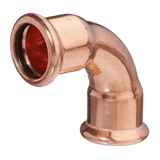
| Compression repair coupling | Accessible spots, such as near the manifold or under a hatch | Maker guidance says a compression repair coupling must be clearly accessible and never buried in screed or concrete |
| MLCP press coupling | Multilayer pipe, permanent joint | Check your pipe maker's rules before burying any joint |
| New loop or loop section | Long or repeated damage, or where no buried joint is allowed | More work, but leaves no joint in the floor |
| Abandon the loop | Damage that cannot be reached | Lost heat in that area, so rebalance the other loops |
One leading manufacturer's guidance also says no connections should be made unless accessible. Both guides point the same way, which is why a joint under screed should never be the default answer. Where a buried repair is unavoidable, get the pipe maker's written approval for the fitting, and wrap and protect it as they ask.
For multilayer pipe, we stock 16mm MLCP compression couplings and MLCP press fit straight connectors, which are pressed with a U-profile jaw. Our MLCP pipe guide shows how to cut, calibrate and press.
Avoid push-fit joints in a floor. A DIYnot article on pipes under screed warns that any buried joint becomes a future access problem, and singles out push-fit elbows as a risk.
Can I replace or bypass a damaged loop instead?
Yes. On some floors, a new loop or section is easier and more reliable than a buried joint.
- Screed: breaking out a whole loop is a big job. A DIYnot contributor describes ripping a damaged pipe out of 90m² of freshly levelled screed. It is usually kept for damage found during the pour.
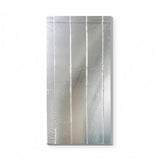
- Overlay and routed boards: lift the boards over the damaged run and lay a new pipe in the grooves back to the manifold.
- Joisted floors: where the pipe sits in spreader plates between joists, it can often be reached from below through the ceiling. See UFH in joisted timber floors.
- Abandon it: if the loop cannot be reached, cap both ends at the manifold with 3/4" blanking caps, rebalance the other loops and accept less heat in that area.
What if it is an electric underfloor heating cable?
Have an electrician test it before anyone digs. Electric UFH must be worked on by a qualified electrician, to BS 7671 and Part P where it applies.
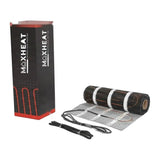
Mat makers' repair advice is to test the cable's resistance. No reading between the cores points to a full break. A reading outside the expected range, or a reading to earth, points to a nick or short. Some makers offer tool rental and repair support to help an electrician locate the fault, and the repair should use the cable maker's own repair kit.
How do I stop UFH pipes being damaged?
Most damage happens while the floor is being built or fitted out, so protection on site matters most.
- Test before and during screeding. One leading manufacturer advises keeping the system under at least 6 bar of water pressure while the screed is laid. Another manufacturer tests UFH at 6 bar for 1 hour before screed, then holds 3 bar while floor coverings go down. A spade strike then shows at once.
- Photograph and measure every loop before it is covered.
- Sleeve pipes through doorways and where they rise to the manifold with pipe conduit and support bends.
- Tell other trades where the pipes run, and mark fixing positions with a thermal camera before drilling.
- Plan fixings such as kitchen island legs, door stops and sanitaryware, so the loop design keeps clear of them.
Design your UFH system yourself in 3 minutes with MaxHeatUFH ProLoop and get an instant quick design and quote. A clear loop plan is the first thing anyone needs when a pipe is damaged. Start your design
Products for this job
- 16mm MLCP Compression Coupling
- MLCP Press Fit Equal Straight Connector
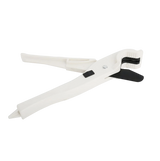
- Pipe Cutter 14-32mm
- Pipe Reaming Tool (Star Reamer)
- Hydraulic Pressure Test Pump
- 3/4" Female Blanking Cap
- Pipe Conduit for 16mm Pipe (25m)
- Manual Pressing Clamp Tool Set (16-32mm U Profile)
Frequently asked questions
Can a damaged underfloor heating pipe be repaired?
Usually, yes. Cut out the damaged section and join it with a coupling made for that pipe, then pressure test. Check the pipe maker's rules on whether the joint can be buried.
Can I bury a repair joint in screed?
Only if your pipe maker approves that fitting for burial. One maker says its compression repair coupling must never be buried in screed or concrete, and others say joints must be accessible.
How do I find UFH pipes before drilling?
Run the heating and use a thermal imaging camera to see the warm pipe runs, then mark them on the floor. Loop drawings and photos from the install help too.
How do I know which loop is damaged?
Isolate the loops at the manifold and pressure test them one at a time. The one that loses pressure is the damaged loop.
Can I keep using the heating with a damaged loop?
Yes, if you close that loop at the manifold and the system pressure then holds. The rest of the loops can run while you arrange the repair.
What pressure should I test a repaired UFH loop at?
Follow your pipe maker's method. One common method is 6 bar of water for at least 60 minutes, checking the joint for leaks.
Does home insurance cover a drilled UFH pipe?
It depends on your policy, especially for trace and access cover. Check with your insurer before work starts.
Sources: DIYnot: question about underfloor heating leaks, DIYnot: pipes under a screed floor, and manufacturers' installation guidance to BS EN 1264
Products in this guide
Watch how each part works and how to fit it, and download its data sheet and install manual.





Every data sheet and manual: Product Library · All videos: MaxHeatUFH on YouTube

Design it in MaxHeatUFH ProLoop
Add your rooms, choose screed, overlay, joisted or electric, and get a free quick design and full kit list with prices.