



Is underfloor heating being banned in the UK? The facts behind the headlines
Underfloor heating is not being banned. A 2026 government consultation proposes higher efficiency and control standards for electric underfloor heating products sold in future, while water UFH and existing systems are not affected.
Short answer: No, underfloor heating is not being banned in the UK. The June 2026 headlines came from a government consultation on new efficiency standards for electric local space heaters, which would require electric underfloor heating products sold in future to reach a minimum seasonal efficiency of 47.5% and to be sold with controls. The government's own assessment estimates 48% of current electric underfloor products would not meet it. Water (wet) underfloor heating is not in scope, nothing already installed has to be removed, and the Future Homes Standard pushes new homes towards heat pumps, which suit underfloor heating well.
In June 2026 several newspapers and websites ran stories saying the government planned to ban underfloor heating, towel rails and gas fires. Understandably, people halfway through an extension or a bathroom refit started asking whether they should stop. The real proposals are narrower, and for most underfloor heating buyers they change very little.
This guide sets out what was actually proposed, which products it covers, what is not affected, and how the separate Future Homes Standard and Part L rules affect heating in new and existing homes. We have used the government's own consultation documents rather than the press coverage.
Where did the underfloor heating ban story come from?
It came from a Department for Energy Security and Net Zero (DESNZ) consultation called "Updating standards for local space heating products". It ran from 25 March to 20 May 2026. In mid-June, press reports described it as a ban on underfloor heating and towel rails.
The consultation proposes replacing the current GB ecodesign rules for local space heaters, which date from 2015, with standards aligned to the newer EU regulation. The stated aims are better product efficiency, lower energy demand and bills, and longer-lasting, repairable products. When this guide was written, the consultation had closed and the government was still analysing responses, so none of it is final.
Ecodesign rules control which products can be placed on the market for sale. They do not reach into homes and remove products that are already fitted.
What is actually proposed for electric underfloor heating?
A higher minimum efficiency rating, mandatory controls, and spare parts rules. The main points from the consultation and its options assessment are:
| Proposal | Detail |
|---|---|
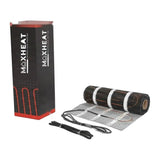
| Products covered | Electric underfloor local space heaters, with the definition widened to include self-regulating cables and mats |
| Minimum seasonal efficiency | 47.5%, up from 38.0% (on a rescaled method, so not directly comparable) |
| Controls | A heater sold without a control must not be able to give heat output without one |
| Spare parts | Floor sensor and a repair kit for heating cables listed as required spares |
| Products expected to fail | 48% of electric underfloor products on the market |
| Timing | Phase-out of the least efficient local space heaters from 2027; a delay to 2029 was considered and rejected |
| Estimated saving | About £10 a year per user on average |
The control types listed in the consultation include electronic room temperature control, electronic room temperature control with a week timer, and adaptive start. In plain terms, electric underfloor heating would need to be sold and run with a proper programmable thermostat rather than a simple on-off switch or dial.
The options assessment also shows that cutting heating hours brings bigger savings than the efficiency rule alone: 5% fewer heating hours adds about £12 a year, and 10% fewer about £24.
Does this affect water underfloor heating?
No. The consultation covers electric local space heaters. Water underfloor heating is not a local space heater: it is part of a central heating system, with the heat made by a boiler or heat pump and carried to the floor by pipes. The consultation documents do not mention wet or hydronic underfloor heating.
If anything, the direction of policy favours water underfloor heating. It runs at low water temperatures, which is exactly what heat pumps need, as our guide to underfloor heating with a heat pump explains.
Will I have to remove my existing underfloor heating?
No. The proposals are about which new products can be sold. Systems already in homes can keep running, and nothing in the consultation requires owners to remove or replace them.
If you repair or extend an existing electric system after any new rules start, the replacement parts and thermostats you buy would need to meet them. That is one reason the proposals list spare floor sensors and cable repair kits.
Should I still install electric underfloor heating?
Yes, where it suits the room. Electric mats and cable remain a sensible choice for bathrooms, kitchens and small rooms where you want a warm floor without running pipes. Choose a system you can control well.
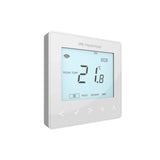
- Use a programmable thermostat with a floor probe. The Heatmiser neoStat-e or Slimline-E give timed heating and a floor limit.
- Insulate under the mat. An insulation or overlay board sends more heat up into the room.
- Match the output to the room. Electric mats come in 100, 150 and 200W/m² versions.
- Use a qualified electrician. The final connection must be made by a qualified electrician under Part P and BS 7671.
For larger areas used for long hours, compare running costs with a water system first. Our guide to water vs electric underfloor heating sets out the differences.
What does the Future Homes Standard change for heating?
It requires new homes in England to have low carbon heating, which in practice means heat pumps or heat networks rather than gas boilers. It does not ban underfloor heating, and it does not apply to existing homes.
- Published: 24 March 2026, with a written ministerial statement the same day.
- In force: 24 March 2027 for most building work, and 24 September 2027 for higher-risk buildings.
- Transition: for most work, projects with plans submitted before 24 March 2027 can build to the 2021 rules if work starts by 24 March 2028.
- Heating: new homes to be fitted with low carbon heating such as heat pumps, making gas boilers effectively phased out in new builds.
- Solar: panels covering an area equal to 40% of the ground floor in most new homes, with exemptions.
Underfloor heating fits this well. A heat pump runs most efficiently at low flow temperatures, and underfloor heating gives a large, low-temperature heat emitter. Our guide to Part L and the Future Homes Standard goes into the compliance detail.
What rules already apply to heating in existing homes?
Part L of the Building Regulations has, since 15 June 2022, set a maximum flow temperature of 55°C for new and fully replaced wet heating systems in both new and existing dwellings in England. Underfloor heating normally runs well below that, so it meets the rule comfortably.
The Future Homes Standard applies to new dwellings only, so it does not stop you replacing a gas boiler in an existing home or adding underfloor heating to one.
Design your UFH system yourself in 3 minutes with MaxHeatUFH ProLoop and get an instant quick design and quote. Start your design
Frequently asked questions
Is underfloor heating being banned in 2026 or 2027?
No. A government consultation proposes higher efficiency standards for electric underfloor heating products sold in future. Underfloor heating as a whole is not being banned, and water systems are not in scope.
Which electric underfloor heating products could disappear?
The government estimates 48% of electric underfloor products now on sale would not meet the proposed 47.5% minimum efficiency. The rules are not final, and products would need to be sold with suitable controls.
Will my electric underfloor heating become illegal?
No. Ecodesign rules control what can be placed on the market. They do not require you to remove or stop using a system that is already installed.
Are gas boilers banned in new homes?
From 24 March 2027, the Future Homes Standard requires low carbon heating such as heat pumps in new homes in England, which effectively rules out gas boilers in most new builds. Existing homes are not covered.
Is wet underfloor heating affected by the new rules?
No. The consultation covers electric local space heaters only. Water underfloor heating is part of a central heating system and suits the heat pumps that new homes will use.
Do I need a smart thermostat for electric underfloor heating?
It is a sensible choice. The proposals would require controls such as electronic room temperature control with a week timer, and a programmable thermostat with a floor probe already meets that kind of requirement.
When will the new electric heating rules start?
No start date has been confirmed. The options assessment refers to phasing out the least efficient products from 2027, and the government was still analysing responses when this guide was written.
Sources: gov.uk consultation: updating standards for local space heating products, DESNZ consultation document, DESNZ local space heaters options assessment, Daily Sceptic coverage, June 2026, Written ministerial statement HCWS1445, 24 March 2026, BRE: Future Homes Standard, HEM Guide: Future Homes Standard published
Products in this guide
Watch how each part works and how to fit it, and download its data sheet and install manual.




Every data sheet and manual: Product Library · All videos: MaxHeatUFH on YouTube

Design it in MaxHeatUFH ProLoop
Add your rooms, choose screed, overlay, joisted or electric, and get a free quick design and full kit list with prices.


