



Energy saving tips for underfloor heating
The settings and upgrades that cut underfloor heating bills: thermostat set points, setbacks instead of switching off, lower flow temperatures, balancing, zoning and insulation, with estimated running costs at the October 2026 price cap.
Short answer: The cheapest way to run underfloor heating is low and steady: set rooms to the lowest comfortable temperature (usually 18 to 21°C), use programmed setbacks rather than switching off, run the lowest flow temperature that still heats the house, and zone rooms so empty spaces sit cool. The Energy Saving Trust estimates that turning a room thermostat down from 22°C to 21°C saves a typical Great Britain home about £120 a year. On a water system, lower flow temperatures also make a condensing boiler or heat pump work more efficiently.
Heating and hot water account for over half of a typical home's energy use, according to the Energy Saving Trust, so the settings on your underfloor heating matter more to the bill than almost anything else in the house. The good news is that UFH responds unusually well to careful settings: it is a low-temperature, whole-floor emitter, so small changes to set points and flow temperature compound across every heated metre.
This guide collects the savings that actually work on UFH: thermostat settings, setbacks, flow temperature, zoning, balancing and insulation, with the figures that can be verified and a note on what changes them. For the fuller cost picture, see underfloor heating running costs.
What temperature should you set underfloor heating to?
The lowest temperature you find comfortable, which the Energy Saving Trust puts between 18 and 21°C for most homes. Every degree above that costs real money: the Trust estimates about £120 a year saved in a typical Great Britain home just by turning the thermostat from 22°C down to 21°C (about £80 in Northern Ireland). Those are averages for a typical home, so your figure depends on house size, insulation and tariff.
Underfloor heating helps here. Because the whole floor radiates gentle heat, floor surfaces are limited to 29°C in occupied areas under BS EN 1264, rooms feel comfortable without hot and cold spots, and many people find a UFH room comfortable at the lower end of that range. Set bedrooms and halls cooler than living rooms, and give each room its own set point: our guide to UFH temperature settings has room-by-room starting points.
Two free checks: make sure the thermostat is reading the room fairly, not behind a curtain, above a heat source or in sun, and remember that turning the thermostat up does not heat the room faster; it only sets where the heating stops.
Should you turn underfloor heating off when you go out?
Not fully, in the heating season: use a setback instead. A screeded floor stores hours of heat, so if you let the house go cold, you pay to reheat the slab from scratch and wait a long time for comfort. Dropping zones by 2 to 4°C while you are out or asleep keeps the recovery short while still cutting the average temperature the house holds, which is what drives the bill. Our guide to setback schedules covers patterns for screed, overlay and timber systems.
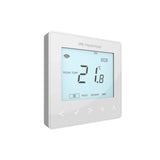
Timing advice from the Energy Saving Trust carries straight over: set heating to come on before you get up and off before you go to bed, around half an hour either side for a responsive system, earlier for a heavy screed. Smart thermostats with optimum start learn how long your floor takes and move the start time themselves; the Trust notes that controls which learn your home's warm-up can cut energy use with little input from you. See smart thermostats for UFH.
Does a lower flow temperature save money?
Yes, on any water UFH system. The flow temperature is the water temperature leaving the mixing valve for the floor, and the lower it runs, the less heat the system wastes and the more efficiently a condensing boiler or heat pump supplies it. This is now baked into the rules: BEAMA's Part L guidance says new heating systems in England should be sized to run at a maximum 55°C flow temperature, and well-designed UFH typically runs well below that.
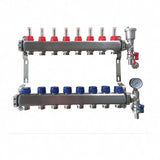
- Find your current setting on the manifold mixing valve or blending valve.
- Drop it a few degrees and live with it for a cold week.
- If every room still reaches temperature, drop again. If one room lags, balance the loops before turning the dial back up: see balancing UFH loops.
- Stop at the lowest setting that heats the house on a cold day.
Weather compensation automates this by tying the flow temperature to the outdoor temperature, and on boilers it is one of the efficiency measures Part L guidance recognises: our guide to UFH weather compensation explains the options.
What does underfloor heating cost to run, roughly?
It depends on the fuel and the heat the house loses, but the unit rates frame it. Under the October 2026 price cap, electricity averages 26.32p/kWh and gas 7.97p/kWh for a typical direct debit customer in Great Britain.
| Scenario (estimate) | Working | Estimated cost |
|---|---|---|
| Water UFH room needing 8kWh of heat a day, gas boiler | 8kWh × 7.97p, before boiler losses | about 64p a day plus boiler losses |
| Same room on direct electric heat | 8kWh × 26.32p | about £2.11 a day |
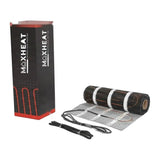
| 4m² electric bathroom mat (150W/m² = 0.6kW), energised about 2 hours a day in total | 1.2kWh × 26.32p | about 32p a day |
Treat all three as estimates, not quotes. The real figure moves with your insulation and heat loss, floor construction and finish, set temperatures and hours of use, the weather, how often the thermostat actually calls for heat, and your tariff: off-peak rates change the electric sums entirely (see electric UFH on Economy 7). A heat pump turns each kWh of electricity into more than one kWh of heat, which is why pairing UFH with one changes the comparison; the mats figure assumes the mat is drawing full power whenever energised, so it is an upper bound for those hours.
Which free settings changes save the most?
Work through these before spending anything:
- Set points down to the lowest comfortable level, room by room: the EST's 18 to 21°C range is the benchmark.
- Setbacks, not off, overnight and when out.
- Flow temperature down to the lowest that works, as above.
- Balance the loops so no room needs the whole system turned up to catch up.
- Shorten hot water and heating hours at the programmer; check the clock after the daylight saving change, as some programmers do not adjust themselves.
- Close off unused rooms at their thermostats rather than heating the whole house to one number: room-by-room zoning is what makes this possible.
- Service the boiler or heat pump yearly, which the EST recommends to keep efficiency up.
Which upgrades are worth paying for?
Where the free changes run out, these earn their keep:
- Insulation under the heating. Heat that goes down is money lost; the right board under the pipe or mat sends the output up into the room and shortens warm-up. See insulation under UFH.
- Smart controls. A hub system adds optimum start, geolocation and holiday modes across every zone. Programmable room control is also what Part L guidance expects of a modern system.
- An A-rated circulator. If an old fixed-speed pump is running your manifold, a modern A-rated pump such as the Grundfos UPM3 Flex uses less electricity for the same flow.
- Weather compensation or load compensation on a boiler system, as recognised in Part L guidance.
If you are still at the design stage, the cheapest energy saving of all is a proper layout: sensible pipe centres, zones that match how you live, and a flow temperature planned for your heat source from day one.
Design your UFH system yourself in 3 minutes with MaxHeatUFH ProLoop and get an instant quick design and quote. Start your design
Frequently asked questions
Is it cheaper to leave underfloor heating on all the time?
Leaving it on at one constant temperature is rarely the cheapest option. The lowest bills come from a programmed pattern: comfort temperature when you need it, a setback of a few degrees when you do not, and the system off outside the heating season.
What is the cheapest temperature to run underfloor heating at?
The lowest you find comfortable. The Energy Saving Trust suggests 18 to 21°C for most homes, and estimates about £120 a year saved in a typical GB home per degree down from 22°C to 21°C. Actual savings depend on your home and tariff.
Does underfloor heating cost more to run than radiators?
Not on the same boiler for the same house: UFH runs at lower water temperatures, which helps a condensing boiler or heat pump work efficiently. Direct electric UFH costs more per kWh than gas, at 26.32p against 7.97p under the October 2026 price cap, so it is usually kept to smaller areas.
How much does electric underfloor heating cost per day?
As a labelled estimate: a 4m² bathroom mat at 150W/m² energised for about 2 hours a day uses around 1.2kWh, about 32p at the October 2026 price cap. Insulation, floor finish, set temperature, usage hours and tariff all move that figure.
Does turning the flow temperature down make rooms cold?
Only if you go below what the coldest room needs on a cold day. Step it down gradually, balance the loops, and stop at the lowest setting that still reaches set temperature everywhere.
Do smart thermostats actually save money on UFH?
They can. The Energy Saving Trust notes that controls which learn your preferences and warm-up times can reduce energy use with little ongoing input, and optimum start suits slow-response floors particularly well.
Does zoning save energy?
Yes. Rooms you are not using can sit several degrees cooler, and Building Regulations guidance already expects at least two independently controlled zones in larger new systems. Room-by-room control is the UFH norm.
Sources: Energy Saving Trust: take control of your heating, Ofgem: energy price cap 1 October to 31 December 2026, BEAMA Part L heating controls guidance
Products in this guide
Watch how each part works and how to fit it, and download its data sheet and install manual.


Every data sheet and manual: Product Library · All videos: MaxHeatUFH on YouTube

Design it in MaxHeatUFH ProLoop
Add your rooms, choose screed, overlay, joisted or electric, and get a free quick design and full kit list with prices.


