Buying or selling a house with underfloor heating: what to check and hand over
What paperwork should change hands when a house with underfloor heating is sold: EPC, TA6 heating certificates, loop drawings and commissioning records, plus the checks to make when there is no paperwork at all.
Short answer: When buying a house with underfloor heating, ask for the design or loop layout, the pressure test and commissioning records, the manifold and flow temperature details, thermostat instructions and any warranties, plus the heating and electrical certificates. Sellers must have an EPC available when the property is marketed (an EPC lasts 10 years), and the TA6 Property Information Form asks them for heating completion certificates and the dates and paperwork of any building works. Missing paperwork is common and rarely fatal, but it changes what your survey should check.
Underfloor heating is a selling point, warm floors, no radiators, low running temperatures, but it is also a heating system hidden inside the floor, which makes buyers nervous in a way a visible boiler and radiators do not. The cure is paperwork and a few simple checks: a well-documented system can be understood, serviced and trusted from day one, while an undocumented one can still be assessed with a pressure test and a thermal imaging survey.
This guide lists what should change hands when a house with UFH is bought or sold, what the seller is actually obliged to provide, what to check before exchange, and what to do when the previous owner left nothing behind. MaxHeatUFH supplies underfloor heating kit and spares UK-wide; servicing and repairs are handled by vetted approved installers, and you can send an installation enquiry here.
What documents should come with a house that has underfloor heating?
The ideal handover pack for the buyer contains:
- The design or loop layout drawing: which loop serves which room, pipe centres, and where pipes run, priceless before anyone drills or screws into a floor.
- Pressure test certificate: proof the loops held pressure before they were covered.
- Commissioning record: flow temperature, flow meter settings per loop, and the first-heat ramp for screeded systems.
- Manifold details: make, number of ports, blending valve set temperature, pump settings.
- Controls: thermostat manuals, app account handover for smart systems, wiring centre layout.
- Certificates: heating system completion certificate, electrical certificates for electric UFH, and boiler or heat pump paperwork.
- Warranties and guarantees, with anything needed to transfer them.
- Service history: inhibitor top-ups, pressure records, any repairs.
Our UFH handover checklist and guide to UFH paperwork and certificates cover each item in detail.
What does the seller have to provide?
Less than buyers assume, but more than nothing. In England and Wales the standard conveyancing paperwork does most of the work:
- EPC: an Energy Performance Certificate must be available when the property is marketed and a copy supplied to the buyer. EPCs rate the home from A to G and are valid for 10 years.
- TA6 Property Information Form: the seller ticks how the property is heated and must provide the completion certificate for the heating system before completion. For building works and alterations, the form asks what was done and when, with copies of planning permissions, building regulations approvals and completion certificates, or certification from a competent person scheme, and an explanation if the documents do not exist.
- Guarantees and warranties: the TA6 asks for copies of all available guarantees and details of any claims. Note that some guarantees cover only the person who commissioned the work, and others transfer only with a fee and notice to the company.
So a buyer can reasonably press, through their conveyancer, for the heating completion certificate, the date the UFH was installed and any related building regulations paperwork. What the TA6 does not demand is the technical pack, loop drawings and commissioning settings, which is why asking the seller directly, early, matters.
What should the survey check on a house with underfloor heating?
A standard homebuyer survey will not test the UFH, so add your own checks, with the seller's permission, during a viewing:
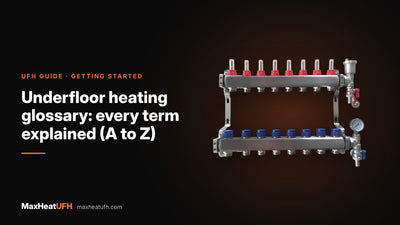
- Find the manifold and photograph it: port count, visible corrosion or weeping connections, and the pressure gauge reading. A system that holds normal pressure is the single most reassuring sign; a gauge near zero needs explaining, see UFH pressure dropping.
- Run the heating during a second viewing, even in summer: every zone on, then feel each room's floor warm within its normal response time.
- Count the thermostats against the rooms and check they respond.
- Look at floors and ceilings below (in flats or two-storey homes) for stains suggesting past leaks.
- Ask about the heat source: boiler service history, or heat pump servicing and MCS paperwork.
What questions should you ask the seller?
- When was the underfloor heating installed, and by whom?
- Is there a loop layout or design drawing?
- Which rooms are heated, and what is under the other floors?
- What is the floor construction, screed, overlay boards or joisted, and what pipe was used?
- What flow temperature does it run at, and from what heat source?
- Has it ever leaked, been repaired, or had antifreeze or inhibitor added?
- Are the thermostats app-connected, and will the account be handed over?
Answers cost nothing to ask for and tell you how well the system has been understood and looked after.
What if there is no paperwork at all?
Common, and manageable. An undocumented system can be characterised after purchase:
- Pressure test it. A hydraulic pressure test pump (£114 inc VAT) proves the loops are sound, the question that matters most.
- Map the pipes with thermal imaging. Run the heating and photograph the floors with a thermal camera: the loop layout draws itself. See finding UFH pipes with thermal imaging.
- Identify the manifold and label each loop by shutting them one at a time and feeling which room cools.
- For electric UFH, have an electrician test insulation resistance and confirm the circuit protection.
Keep everything you produce: it becomes the handover pack you will pass on when you sell.
Moving in: what should you do in the first month?
Learn the controls before winter: zone names, schedules, setback temperatures, and how the blending valve and pump are set. Check the system pressure weekly at first so you know its normal. If the history is unknown, have an approved installer give the system a once-over, water quality and inhibitor, pump settings, loop balancing, which is cheap insurance on an unknown system. Our UFH maintenance guide lists the annual jobs.
Selling a house with underfloor heating: what should you hand over?
Everything in the buyer's list above, assembled before the house goes on the market: it answers survey queries before they are raised and supports the asking price rather than inviting a renegotiation. Dig out the completion certificate now, not the week before exchange, because the TA6 requires it before completion and chasing an installer from years ago takes time. If parts are missing, a fresh pressure test record and clear photographs of the manifold and settings go a long way with a nervous buyer.
Free design tool: extending or finishing a system in your new home? Design your UFH system yourself in 3 minutes with MaxHeatUFH ProLoop and get an instant quick design and quote. Start your design
Frequently asked questions
Does underfloor heating put buyers off?
Mostly the opposite, warm floors and free walls show well. What puts buyers off is an undocumented system nobody can explain. A handover pack with certificates, settings and a loop drawing turns the heating back into the asset it is.
Is there a certificate for underfloor heating installation?
The heating system should have a completion certificate, which the TA6 form requires the seller to provide before completion, and works that needed building regulations approval should have their own certificates or competent person scheme certification. Electric UFH should have electrical installation certification.
Can a survey detect problems with underfloor heating?
A standard survey rarely tests it. Ask for the heating to be running during a viewing and feel each floor, check the manifold pressure gauge, and consider a heating engineer's inspection or a thermal imaging survey for a high-value purchase.
How do I find out where the pipes run in my new house?
Run the heating and survey the floors with a thermal camera: the warm lines map the loops. Do this before fitting carpet gripper, door stops or anything else screwed to the floor.
Do UFH warranties transfer to the new owner?
Not always. Some guarantees cover only the person who had the work done, and some transfer only on payment of a fee with notice to the company. Check the terms during conveyancing and complete any transfer steps before completion.
Should I pressure test underfloor heating before buying a house?
If the system's history is unknown and the purchase hinges on it, it is a reasonable ask, done by a heating engineer with the seller's consent. Otherwise test promptly after moving in so any issue is found on your terms.
Sources: Law Society TA6 form (5th edition) explanatory notes
Products in this guide
Watch how each part works and how to fit it, and download its data sheet and install manual.


Every data sheet and manual: Product Library · All videos: MaxHeatUFH on YouTube

Design it in MaxHeatUFH ProLoop
Add your rooms, choose screed, overlay, joisted or electric, and get a free quick design and full kit list with prices.